Our Air Expert Insights Team brings decades of compressed air industry experience and unmatched technical expertise to deliver blogs, resources, and advice you can trust. Having served in roles like field technicians, engineers, sales, and customer support specialists, we’ve worked hands-on with the equipment we write about and know the premier brands we represent inside and out.
We’re dedicated to educating you before and after your purchase, helping you make informed decisions and maximize the value of your investment. Buying online should be seamless, but we believe convenience shouldn’t come at the expense of expert service.
Whether you’re researching a product, troubleshooting, or exploring your options, we’re here to guide you every step of the way.
A properly installed compressed air system is the backbone of many industrial and commercial operations. It supplies reliable power for pneumatic tools, equipment, and processes. However, installing a compressed air system can be challenging without the right information or direction. This guide will walk you through the process of installing a compressed air system, providing helpful tips to ensure efficiency, safety, and compliance with local regulations.
What to Consider Before Installing a Compressed Air System
Installing a compressed air system requires careful planning to ensure it meets your specific operational needs. Proper planning to evaluate your space, usage requirements, and infrastructure upfront will help prevents costly adjustments or underperformance later.
Purpose and Applications - Determine the primary use of your air compressor setup. Whether it’s operating high-demand industrial tools, smaller workshop tools, or a combination of both, understanding the load will influence your purchase.
Space Requirements - Compressed air equipment can occupy a significant amount of space. Make sure you have sufficient space to house the compressor, storage tank (if needed), and piping. Be sure to also consider airflow and ventilation space for cooling.
Compressed Air Flow Needs - Accurately assess your pressure and CFM requirements. Higher CFM demands require more robust compressors and possibly additional air receivers or larger pipes to maintain steady pressure.
Electrical Requirements - Understand the electrical and power requirements of your compressed air system. Ensure your electrical system can meet the compressor’s electrical requirements.
Local Building Codes and Safety Regulations - Always check local building codes, safety regulations, and permitting requirements. Failing to comply with regulations can result in fines, void warranties, or create unsafe operating conditions.
Tools and Equipment Needed For Installation
Before you begin installation, ensure you have the following components and tools readily available to successfully install the compressed air system:
Required Components
Air Compressor - Ensure you have the proper air compressor for your needs. If you haven’t purchased yet, view a variety of air compressors to find the right fit. Choose between oil-lubricated or oil-free models, taking into account noise levels, maintenance, and air quality needs.
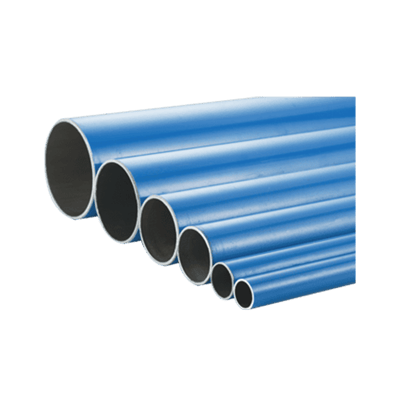
Pipes and Fittings - Check that you have the right pipes and fittings available. Steel, copper, aluminum, or plastic: Each has pros and cons. Steel is durable but heavy and prone to corrosion if not properly treated. Copper is corrosion-resistant but can be expensive. Aluminum is lightweight and resistant to corrosion. Certain plastics (like reinforced PVC or PEX) are cost-effective and easy to work with. Aim for properly sized pipes to minimize pressure drop.
Regulators, Dryers, and Filters - These are essential for compressed air best practices, ensuring your system delivers clean, dry, and well-regulated air. This equipment helps extend equipment life and maintain consistent performance.
Air Storage Tanks - This may be necessary for your compressed air system to handle peak demands without sacrificing pressure.
Basic Tools
Wrenches, Sockets, and Screwdrivers: For tightening and securing fittings.
Pipe Cutters or Saws: Especially important for cutting metal, copper, or plastic pipes cleanly.
Measuring Tape and Writing Utensil: To measure and mark proper pipe lengths.
Personal Protective Equipment (PPE): Safety glasses, gloves, ear protection, and appropriate clothing.
Step-by-Step Guide to Installing a Compressed Air System
Now that you have all that is needed to complete your installation, here’s a step-by-step guide to installing a compressed air system.
Step 1: Prepare the Space
Map Out the Layout - Find a clean, dry, and well-ventilated room to install your compressed air system. Sketch your workspace and plan the route for your pipes. Use short, direct routes to reduce pressure drops. The system should be at least two feet away from walls and corners. Keep in mind future expansions: a looped system can help distribute air more evenly.
Place Components Strategically - Filters, Dryers, and Regulators should be easily accessible for maintenance. Drain Valves should be located at low points to remove water from the system.
Clear the Area - Remove any obstacles and debris around the installation site. Ensure adequate ventilation and accessibility for servicing. Do not store any corrosive or toxic agents near the compressor.
Level the Surface - Compressors must be placed on a stable, level base. An uneven surface can lead to vibration, undue wear, and hazardous noise levels.
Adhere to Safety and Codes - Install your equipment in a designated area meeting local regulations (e.g., temperature controls, explosion-proof lights if needed).
Step 2: Assemble the System Components
Position the Compressor - Unpack the air compressor and ensure all components are free of damage and parts are not missing. Follow the manufacturer’s instructions for proper assembly sequence. Ensure all accessories, like belts or guards, are installed correctly.
Mount the Compressor - As reviewed above, ensure the compressor is securely mounted and level, ensuring proper ventilation.
Connect the Air Lines - Begin connecting the airlines and fittings; ensuring a proper fit.
Attach Filters, Dryers, and Regulators - They are typically not included with an air compressor. If you purchased these items separately, mount each component in the correct flow order. Typically, after the air leaves the compressor, it flows through the dryer, then filter, then regulator. Shop dryers and filters.
Install the Storage Tank (If Needed) - Place it where it’s easy to monitor pressure and perform maintenance checks.
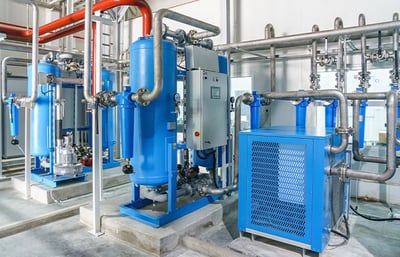
View the graphic below for an example of a typical setup of a rotary screw air compressor with an air dryer.
Step 3: Install the Air Distribution Pipelines
Cut Pipes to Length - Measure carefully and avoid sharp edges or burrs. Proper cuts prevent leaks and damage.
Secure Fittings - Use appropriate sealants, such as Teflon tape or pipe dope, to minimize leaks. Avoid over-tightening, which can cause cracks in pipes or fittings.
Mount the Pipes - Use brackets or pipe hangers to support piping and reduce vibration. Maintain a slight slope toward drain points, facilitating water drainage.
Step 4: Test the System
Check for Leaks - Pressurize the system and use a soapy water solution or leak detector to find any hissing or bubbling. Tighten or reseal leaking connections.
Monitor Pressure Levels - Ensure the system maintains steady pressure when equipment is engaged. Run a pressure test according to the manual’s instructions.
Adjust Regulators - Set them to the required PSI for optimal tool and equipment performance.
Common Mistakes to Avoid
Undersizing the Compressor or Pipes: This can lead to pressure drops and reduced efficiency.
Ignoring Condensate Drainage: Failing to regularly drain water accumulation can cause corrosion and damage, limiting the lifecycle of your equipment.
Over-Tightening Fittings: Fittings that are too tight can crack plastic pipes or distort threads on metal fittings.
Skipping Filter/Regulator Maintenance: Regular maintenance is key to optimally running equipment. Skipping maintenance can result in moisture or contaminants affecting tool performance.
Non-Compliance with Regulations: Always check building codes, fire safety, or other industry-specific requirements.
Get Started Today with AirCompressors.com
By following this comprehensive guide, you’ll be well on your way to a safe, efficient, and long-lasting installation. With proper preparation, the right tools, and ongoing maintenance, your compressed air setup can serve you reliably for years to come. If you need specialized solutions, remember that professional help is just a call away at AirCompressors.com.
Utilize the educational resources from AirCompressors.com to get a foundational understanding of air compressor technology.
Ready to purchase your equipment? Browse our broad selection of equipment from compressors and dryers to filters and part kids. We have what you need for your specific projects. If you need guidance, contact our expert team to help guide you through your purchase.
Regular air compressor maintenance is essential for extending the lifespan of your equipment and keeping it running at optimal efficiency. No matter your industry, knowing how to clean an air compressor properly and conduct an inspection can help prevent downtime, improve performance, and increase safety. In this guide, we’ll walk you through each step of maintenance, from cleaning external components to checking pressure gauges, so you can feel confident about maintaining your air compressor.
Why Cleaning and Inspecting Your Air Compressor Matters
Keeping an air compressor clean and in good working order can make all the difference in its efficiency, longevity, and overall safety. Here are a few reasons why:
Dust, debris, and moisture can harm performance: Over time, contaminants can build up in the compressor, causing reduced airflow and potential damage to internal components. Regular inspection and cleaning can lessen the buildup.
Neglected maintenance can lead to safety risks: Leaks, rust, and worn-out components can become serious safety hazards if not detected and addressed early. Monthly or quarterly inspections are important to the safety of your business and your staff.
Regular inspections prevent costly repairs: By identifying wear and tear before it becomes critical, you can avoid expensive part replacements and extended downtime.
Let’s review the basics of how to clean your air compressor to reduce the risks of damage, downtime, and safety concerns.
Step-by-Step Guide to Cleaning Your Air Compressor
Cleaning your air compressor involves several important steps that help extend the life of your equipment and ensure it performs optimally. By focusing on each component of the air compressor, you can remove harmful debris, maintain proper airflow, and prevent moisture-related damage. Below is a step-by-step guide to safely and effectively clean your air compressor.
Safety First—Preparing for Maintenance
Power down and depressurize: Turn off the air compressor and disconnect it from the power source. Release any remaining air pressure by opening the drain valve.
Use protective equipment: Wear safety goggles, gloves, and protective clothing to shield yourself from any debris or chemicals.
Exterior Cleaning and Debris Removal
Wipe down the surface: Use a soft cloth or brush to remove dust and dirt from the compressor’s exterior.
Clean the cooling fins: If your compressor has exposed cooling fins, use compressed air or a soft brush to clear away debris.
Clean the air intake vents and filters: Gently remove buildup from air intake areas to ensure optimal airflow and prevent clogs.
Draining and Cleaning the Air Tank
Drain moisture properly: Over time, water can accumulate in the tank. Open the drain valve slowly to remove the moisture.
Check for rust or condensation buildup: Inspect inside the tank (if accessible) or observe any discolored water. A large amount of rust buildup may alert you to needing a professional cleaning service for your equipment.
Checking and Cleaning Air Filters
Remove and inspect filters: Air filters trap dust and particles. If they appear heavily soiled or damaged, they may need replacement.
Clean or replace the filters: Depending on the filter type, use compressed air to clean the filter or wash it gently if it’s reusable. Replace filters that are beyond cleaning to maintain proper airflow. Ensure you keep a set of filters on hand for quick and easy replacement.
Inspect hoses for cracks, wear, or leaks: Damaged hoses can reduce performance and pose safety hazards.
Secure connections: Make sure all fittings are tight and sealed to prevent air leaks and maintain consistent pressure.
Still have questions about cleaning your equipment or want to discuss your findings? Contact our experts at AirCompressors.com for guidance.
How to Inspect Your Air Compressor for Issues
Conducting regular inspections of your air compressor is an essential part of maintaining its performance and identifying potential problems before they become critical. By inspecting both the exterior and interior components, you can detect leaks, wear, and other issues that may compromise efficiency or safety.
Below is an overview of how to effectively inspect your air compressor to keep it in top condition.
Visual and Auditory Inspection
Look for signs of wear or corrosion: Check both internal and external parts for rust, discoloration, or physical damage.
Listen for unusual noises: A change in sound can indicate a mechanical problem. Rattling, squealing, or grinding are red flags that warrant further investigation or air compressor troubleshooting.
Checking Pressure Gauges and Valves
Test pressure readings: Turn on the compressor and check the gauge. If the pressure fluctuates or falls outside the expected range, you may have a leak or regulator issue.
Ensure safety valves work correctly: The safety release valve should pop open if the internal pressure reaches a dangerous level. If it doesn’t function, replace it immediately.
Testing Performance and Airflow
Ensure consistent airflow and pressure: If you notice irregularities, check for obstructions or leaks in the system.
Identify and fix pressure drops: A sudden drop in pressure could signal a failing part or leak in a hose, valve, or seal. Immediate service may be required. Read more about pressure drops in our article here.
Proactive Maintenance Checklist to Keep Your Air Compressor Running Smoothly
Schedule routine inspections: Perform minor checks like oil levels and filter cleanliness weekly, and perform more in-depth inspections monthly or quarterly.
Keep a maintenance log: Document each service, replacement part, and inspection result. This helps identify trends and creates a plan for future maintenance.
Use high-quality parts and consumables: Investing in quality filters, hoses, and oil can significantly extend the life of your compressor. Browse our selection of products at AirCompressors.com.
Follow manufacturer recommendations: Each brand or model may have unique needs for air compressor service and maintenance. Access Atlas Copco resources and Quincy Compressor resources to ensure you are maintaining your equipment appropriately.
Keep Your Air Compressor in Peak Condition with AirCompressors.com
Proper air compressor maintenance doesn’t have to be complicated or time-consuming. By cleaning, inspecting, and addressing minor issues early, you can avoid major repairs and ensure your compressor runs smoothly for years to come.
In compressed air systems, a pressure drop is a natural but often costly challenge. When compressed air is distributed, it inevitably loses some of its force. Even small drops in pressure can significantly impact the efficiency and performance of your operations, leading to increased energy costs and potential downtime.
This guide will walk you through the basics of pressure drops, detail how they occur, explain why they matter, and provide practical steps on how to reduce them. You’ll also learn how AirCompressors.com collaborates with trusted brands to ensure customers get the best solutions for minimizing pressure drops in their systems.
What is a Pressure Drop?
A pressure drop is the loss of pressure between two points in an air compressor system. This typically happens as the air travels from the air compressor through the distribution network, such as piping, hoses, fittings, and any additional equipment before reaching the final point of use. Each component in the pathway adds some level of resistance or friction to the airflow. The more resistance that exists, the more the pressure of the air is reduced.
Pressure drops are inevitable, whether naturally occurring or caused by various factors. In a compressed air system, even minor inefficiencies add up quickly. That’s why understanding where and how pressure drops occur is essential for maintaining air compressor system efficiency and controlling operating costs.
What Causes an Air Pressure Drop?
Unintended pressure drops can be triggered by several factors within a compressed air system:
Pipe Size and Length
The longer the distance air has to travel, the more friction it encounters against the inner surfaces of pipes. This friction causes minor drops in pressure that, over a long stretch of piping, can accumulate significantly. In addition, higher airflow velocity can aggravate friction-related pressure losses, as turbulent airflow wastes more energy than a slower, steadier flow. Facilities that rely on extensive piping networks often see pronounced pressure drops at points farthest from the compressor. It is important to minimize unnecessary distances and place air receivers closer to the end-use equipment to help reduce these friction-related losses.
Leaks and Improper Maintenance
Leaks might seem like a minor inconvenience, but even the smallest hole or crack in hoses and fittings can waste a large amount of compressed air over time. Each leak not only causes the system to lose pressure, but it also forces the compressor to work harder to compensate the leak. Worn seals, damaged O-rings, and improperly tightened connections are all red flags that can exacerbate the problem. Regular maintenance inspections, including testing for leaks and promptly repairing any issues, can save energy, reduce wear on equipment, and help maintain a stable pressure level throughout the network.
Excessive Bends and Obstructions
As with the distance of the piping, each elbow, curve, or angle in your compressed air piping system increases the airflow’s resistance. Over time, these bends add up, causing a drop in pressure that is particularly apparent in systems with many directional changes or complex configurations. Additionally, obstructions such as dirt, dust, rust, or scale buildup inside the pipes can narrow the available space for air to flow. This makes the compressor work harder to push the same volume of air through restricted passages. Routine cleaning and a strategic piping layout with as few bends as possible can go a long way toward maintaining consistent pressure.
Inadequate Filtration
Air filters are necessary for removing contaminants like moisture, oil aerosols, and solid particles from compressed air. However, filters that are clogged or not appropriately sized for the volume of airflow can become a bottleneck. When the filter is blocked, the air has to pass through a smaller opening, which requires more energy and reduces pressure downstream. It’s crucial to select filters based on your system’s maximum flow rate and operating conditions and to adhere to recommended maintenance routines to ensure that filters remain clean and efficient.
Undersized Equipment
Selecting a compressor or downstream components (such as dryers, receivers, or filters) that are too small for your system’s demands can be a direct correlation of frequent and severe pressure drops. When the demand for compressed air surpasses the capacity of the installed equipment, the pressure in the system will inevitably fall below the desired setpoint. This often leads operators to compensate by increasing pressure settings, which in turn raises operating costs and stresses the machine. Properly sizing equipment during the system design phase—or upgrading when usage patterns change—helps maintain a stable pressure and optimizes both performance and energy efficiency.
How Pressure Drop Affects Your System
A pressure drop in your compressed air system can lead to a range of issues:
Reduced Productivity: Equipment that relies on a certain air pressure may underperform or shut down if the air supply falls below required levels. Ensure you know your required level and track it often to reduce decreases in tool performance and slow production speeds.
Increased Energy Consumption: When pressure drop is high, users may be tempted to raise the compressor setpoint to compensate for pressure losses. By doing so, this causes compressors to work harder, often leading to higher energy costs and unnecessary wear on equipment.
Higher Maintenance Costs: Systems operating under higher stress are more likely to fail, requiring frequent repairs or replacements. Having an efficiently running system will increase the longevity or your equipment and reduce maintenance.
How to Reduce Pressure Drop
Keeping pressure drop as low as possible is vital for optimal efficiency and long-term reliability. Below are some strategies to keep your equipment performing its best:
Proper System Design - Ensure that the piping layout is optimal for your facility’s needs. Avoid unnecessary turns and select pipe diameters that can handle peak flow demands.
Routine Maintenance and Leak Checks - Schedule regular inspections and address any leaks immediately. Maintenance routines should include checking for worn seals, damaged hoses, and ensuring all fittings are tightened properly.
Use High-Quality Filters and Regulators - Select the right filters for your application and replace or clean them as recommended by the manufacturer. Properly sized and maintained regulators also help maintain consistent pressure.
Implement Smart Controls - Modern compressed air systems can be equipped with control units that monitor airflow and pressure in real time. These controls help detect inefficiencies and maintain consistent pressure levels.
Correct Sizing and Equipment Upgrades - Make sure your air compressor and any downstream components are adequately sized for your facility’s demand. If the system is undersized, investing in larger or more efficient equipment could significantly reduce pressure drop.
How AirCompressors.com Works with Trusted Brands
AirCompressors.com partners with top-tier manufacturers like Atlas Copco and Quincy Compressor to provide solutions that tackle pressure drop issues effectively. These trusted brands produce reliable and energy-efficient compressors, dryers, filters, and more, ensuring your system runs at peak performance.
Atlas Copco: Known for cutting-edge technologies and innovative designs, Atlas Copco provides compressors and supplementary equipment engineered to minimize losses and maximize uptime. Their products excel in industries where precise air quality and consistent pressure are essential, such as automotive, food and beverage, and electronics.
Quincy Compressor: A reputable name in the compressed air industry, Quincy offers robust, durable compressors and components. Designed for heavy-duty applications, Quincy’s equipment can handle harsh environments while keeping pressure drop to a minimum. They are often found in manufacturing plants, oil and gas operations, and other demanding applications.
By choosing AirCompressors.com, you gain access not only to these leading brands but also to a team of experts who can recommend the best equipment for your specific needs. We can help you select the proper compressed air system and components to ensure minimal pressure drop and optimal performance.
Turn to AirCompressors.com for your Air Compressor Needs
Pressure drop is a critical issue that can significantly affect the performance, energy consumption, and longevity of your compressed air system. Understanding its causes and adopting strategies such as proper system design, regular maintenance, and the use of high-quality, well-sized equipment can help minimize pressure loss.
Turn to AirCompressors.com to ensure your system is optimized to run smoothly and cost-effectively, helping you meet the demands of your operation with confidence.
Air compressors are fundamental to modern engineering and manufacturing, powering everything from industrial machinery to everyday pneumatic tools. Their history of compressor technology dates back thousands of years—long before the invention of modern machinery. In this article, we’ll take a journey through the evolution of air compressor design, exploring how simple bellows transformed into the high-tech mechanical air compressors we rely on today. We’ll also discuss why compressed air power remains essential for industries worldwide and how air compressor energy efficiency continues to shape future innovations.
Early Uses of Compressed Air
As early as 1500 B.C., people found ways to harness compressed air for practical purposes. Ancient civilizations used bellows, simple devices that manually pumped air into fires, to reach higher temperatures for melting and forging metals. Even before bellows became widespread, individuals discovered that directing air into an enclosed space could intensify flames, improving cooking and heating efficiency. These pioneering uses of compressed air highlight just how essential and long-standing air compression has been, predating modern industrial applications by centuries.
The Introduction of Mechanical Air Compressors
During the 18th and 19th centuries, the Industrial Revolution sparked major advancements in compressor history. During this period, inventors began experimenting with new ways to compress air on a larger and more consistent scale.
The First Piston Compressors
As industries grew, traditional bellows fell short of meeting demand. This led to the invention of the piston-based mechanical air compressors. These machines utilized a crankshaft, connecting rods, and cylinders to draw in air and compress it under high pressure, generating a powerful and steady flow. The reliable output of piston compressors paved the way for large-scale industrial processes, setting a new standard in efficiency and productivity.
Early Applications of Mechanical Air Compression
With the new invention of mechanical air compressors, new applications were used across many industrial processes. The consistent, high-pressure airflow of the piston compressors introduced new production methods that set the stage for rapid growth during the industrial revolution. Compressed air supported industries such as mining and manufacturing, making drilling safer and providing support for specialized tasks that required precise control like riveting and clamping.
Industrial Revolution and Growth in Air Compressor Technology
The Industrial Revolution marked a turning point in air compressor history, as new machinery and large-scale production needs pushed innovators to refine and diversify air compressor technology.
The Expansion of Compressed Air Power
Rise of Pneumatic Tools: With advancements in compressed air technology, factories and workshops were able to implement air tools and pneumatic power for tasks like sanding, painting, and polishing, propelling the compressed air power movement forward.
Mass Production: As assembly lines became standard, compressed air provided the consistent and controllable force needed to automate various production stages.
Advancements in Mining and Construction
Tunneling and Infrastructure: Large-scale projects like railway tunnels relied on compressed air for jackhammers, drills, and rock-blasting equipment. These tools allowed for safer and more efficient work in challenging conditions.
Heavy Machinery: Air-powered equipment, including concrete breakers and pneumatic hammers, became a staple on construction sites, significantly reducing labor intensity and speeding up construction processes.
The 20th Century – New Designs and Innovations
The 20th century brought a wave of new air compressor advancements, including the invention of rotary screw compressors and centrifugal (oil-free) compressors. During this time, manufacturers saw great improvements in efficiency in terms of performance and cost-effectiveness.
Read more about piston and rotary screw air compressors and their advantages and key differences.
The Rise of Rotary Screw Compressors
The creation of rotary screw compressors was a significant advancement over traditional piston-based systems. By utilizing two interlocking helical rotors, these compressors were able to compress air more smoothly and efficiently than earlier designs. This new technology produced a continuous flow of air, had fewer moving parts, and required less maintenance. Additionally, rotary screw compressors operate with lower vibration and noise levels, making them well-suited for a wide range of industrial settings. Their efficiency and reliability quickly made them a popular choice for companies seeking to reduce downtime, optimize energy consumption, and scale production without sacrificing performance.
Oil-Free Compressors and Specialized Applications
Centrifugal compressors are “oil free” by design. They produce compressed air with a minimal amount of oil contamination, making it a top choice for applications needing clean air, or Class 0 oil-free air. Unlike traditional compressors that rely on oil for lubrication, oil-free models typically use specific coatings, seals, or water-based lubrication methods to ensure that no oil comes into contact with the compressed air.
Oil-free air compressors were adopted by a variety of industries due to their cleaner air output and improved safety, including in pharmaceutical tablet coating, electronic circuit board manufacturing, food processing plants and medical organizations where sterile environments were necessary.
Modern Air Compressors and Future Trends
Today’s modern air compressor offers advanced capabilities, from smart controls to sustainability features. Innovations in air compressor technology continue to push boundaries for performance and energy savings to reduce carbon footprint.
Read more about the benefits and applications of oil-free vs. oil-flooded air compressors.
Smart Air Compressors and Energy Efficiency
IoT Integration: Many compressors now feature sensors and internet connectivity, allowing for real-time performance monitoring and predictive maintenance.
Variable Speed Drives (VSDs): By adjusting the motor speed to match demand, VSD technology significantly boosts air compressor energy efficiency and lowers operational costs.
Sustainability and the Future of Compressed Air
Eco-Friendly Systems: As governments and industries push for greener solutions, manufacturers focus on reducing emissions and conserving energy in compressor designs.
Renewable Energy Integration: In some cases, compressors are powered by renewable energy sources like solar or wind, further minimizing the carbon footprint of compressed air.
The Evolution of Air Compressors – A Legacy That Drives Industry Forward
From the first bellows to today’s modern air compressor systems, the evolution of air compressors has reshaped industries and sparked innovation that has advanced how we do business. Air compressors have truly transformed the way we build, create, and power our world.
Today’s modern air compressor solutions emphasize sustainability, efficiency, and smart controls. If you’re exploring the latest compressor solutions, turn to AirCompressors.com to explore a wide selection of air compressors, for uses across all types on industries.
Air compressors are indispensable tools across a wide range of applications. These machines pull in ambient air, compress and pressurize it, and store until needed. From powering pneumatic tools in small workshops to driving large-scale manufacturing operations, they are used in many types of businesses and industries. If you’ve ever wondered about the intricacies of an air compressor and how they function, this beginner’s guide will help you understand the fundamental working principles, essential components, and overall operation of these machines.
The Basic Working Principle of an Air Compressor
Air compressors operate by drawing in ambient air, compressing it, and storing it under pressure. This compressed air can be released in a controlled manner to perform various tasks, such as driving tools or inflating tires.
The process can be broken down to four main functions:
Activation: The motor converts energy into a mechanical force, activating the pistons.
Air Intake: The compressor pulls in atmospheric air.
Compression Stage(s): Air is forced into the chamber to prepare for compression
Storage & Regulation: The pressurized air is stored in a tank or system until needed.
Single-Stage Compression
Single-stage air compressors compress air once before directing it into the storage tank. They deliver moderate pressure levels, making these machines are well-suited for small-scale commercial projects and applications. Their straightforward operation often makes them more affordable and easier to maintain, making single-stage compressors a good choice for tasks where extreme pressures are not necessary.
Two-Stage Compression
Two-stage air compressors take the process a step further by compressing air twice, which significantly boosts the final pressure while enhancing overall efficiency. This makes them an indispensable tool in demanding industrial environments where a reliable supply of high-pressure, high-volume air is critical. The additional compression stage can increase energy savings and reduce wear, making two-stage units a long-term solution for heavy-duty, continuous-use applications.
Different compressor types such as piston/reciprocating or rotary-screw, employ variations of these compression stages. For more details on various compressor designs, check out our post on [Different Types of Air Compressors.
Key Components of an Air Compressor
Regardless of the type or size, every air compressor relies on several key components that work together to generate and store compressed air.
Motor & Power Source
The motor is the driving force behind an air compressor, converting electrical or chemical energy into mechanical force to compress air. The choice between electric and gas-powered motors can significantly impact energy efficiency and operational cost.
Electric
Electric air compressors tend to operate more quietly compared to gas-powered models, produce fewer emissions, and generally require less maintenance, making them an ideal choice for indoor use in workshops, garages, and industrial facilities.
Gas Powered
Gas powered air compressors are well-suited for remote job sites or outdoor settings where electricity may not be readily available. Although they offer greater mobility, these models are typically louder and demand more diligent fuel management and maintenance compared to their electric counterparts.
Air Intake & Filters
During operation, ambient air is drawn through the compressor’s intake port, which often brings along dust and other particles. To alleviate contamination, filters are placed before the compression chamber to capture impurities, thereby improving overall efficiency and prolonging the lifespan of internal components.
Compression Chamber
The compression chamber is the center of any air compressor, where air is transformed from its ambient state to a higher-pressure form. Within this chamber, different compressor designs utilize differing mechanical processes to compress the air.
Rotary-Screw Compressors
Rotary-screw compressors operate by trapping air between two interlocking helical screws, providing a continuous and steady airflow. Their low vibration and high-duty cycles make them ideal for industrial settings where consistent performance and reliability are paramount.
Piston/Reciprocating Compressors
Piston, or reciprocating, compressors rely on pistons moving back and forth within cylinders to compress the air. This design is a favorite among small businesses because it balances simplicity, affordability, and effectiveness for a wide range of applications.
Scroll Compressors
Scroll compressors use two spiral-shaped elements to gradually compress air. Since they operate without oil in the compression chamber, they offer a clean, oil-free output, making them ideal for medical facilities and other environments that demand contaminant-free operations.
Storage Tank
Once air is compressed, it’s directed to a storage tank, also known as a receiver, where it remains until needed. The tank acts as a buffer, ensuring a steady supply of compressed air while preventing the motor from running continuously.
Pressure Controls & Safety Valves
Pressure controls and safety valves play a vital role in maintaining safe operating conditions within an air compressor system. By automatically regulating or releasing excess pressure, these devices help prevent overheating, mechanical stress, and potential damage, ensuring that your compressor is reliable and runs efficiently.
In addition to core components, accessories like filters, regulators, hoses, couplers, and routine maintenance parts all play vital roles in the overall performance of your air compressor setup.
Below is a quick breakdown of how air compressor operations unfold.
Step 1: Air Intake & Filtering
Ambient air is pulled in through the intake port.
Filters remove dust and debris to protect the internal components.
Step 2: Compression Process
Depending on the compressor type (piston, screw, or scroll), mechanical action pressurizes the air.
Single-stage or multi-stage compression processes may be used.
Step 3: Air Storage & Pressure Regulation
Compressed air is then stored in a tank or system.
Pressure regulators ensure steady, safe pressure before releasing air.
Step 4: Releasing Compressed Air for Different Uses
When you attach a tool or open a valve, pressurized air flows out to power the intended application.
Air Compressor Uses and Functions
Air compressors have a broad range of functions, making them a versatile asset for both small businesses and large manufacturing operations.
Powering Pneumatic Tools
Drills, nail guns, sanders, and other pneumatic tools rely on compressed air.
Offers a consistent power source with less manual effort.
Ideal for tasks requiring precision, speed, and durability.
Industrial & Commercial Applications
Essential in manufacturing, HVAC, and auto repair industries.
Compressed air is used to run assembly lines, packing equipment, automated machinery, and streamline large scale operations.
Provides a continuous, reliable source of high-pressure air for large-scale processes.
Whether you’re a small business owner or industry professional, understanding the functions of an air compressor ensures you select the right model for your unique needs.
Learn More About Air Compressors
This guide summarizes how air compressors work, coving their core principles, key components and step-by-step operation. For a deeper dive into topics like maintenance, oil-flooded vs. oil-free compressors, or best practices for industrial setups, explore our additional resources:
Resources – Find manuals, guides, and expert insights.
If you’re unsure about which air compressor is right for you, our team of experts is here to help. Contact us today for personalized recommendations, product information, or troubleshooting tips.
Frequently Asked Questions About Air Compressor Operation
Q: What happens if an air compressor overheats? A: Overheating can trigger safety mechanisms like automatic shut-off. Regularly check the cooling systems and maintain proper ventilation to avoid damage.
Q: Do air compressors refill themselves? A: Yes. Once air pressure drops below a certain threshold, the compressor restarts to draw in air and rebuild pressure automatically.
Q: How does an air compressor know when to shut off? A: Pressure sensors and switches monitor tank pressure. Once it reaches the preset pressure, the compressor shuts off to prevent over-compression.
Q: How long can an air compressor run continuously? A: This depends on the duty cycle and cooling system. Some industrial rotary-screw compressors can run 24/7, while smaller piston compressors require periodic rest.
Q: What is the difference between oil-free and oil-lubricated compressors? A: Oil-lubricated models are more durable and quieter, but they require regular oil changes and may introduce oil residue. Oil-free compressors are cleaner but often have shorter lifespans. Learn more here: Oil-Flooded vs. Oil-Free Compressors Guide
When it comes to finding the best air compressor brands on the market, Atlas Copco and Quincy Compressor consistently stand out for their reliability, engineering excellence, and long-standing reputations. At AirCompressors.com, we offer a wide selection of both Atlas Copco and Quincy Compressor models, ensuring you have access to high-quality equipment that meets your needs. Whether you’re a facility manager, engineer, contractor, or business owner, a well-chosen air compressor can boost productivity and efficiency for countless industrial and commercial applications. In this guide, we’ll explore why Atlas Copco and Quincy Compressor are trusted air compressor brands and how to determine the best fit for your operations.
Why Choosing a Reputable Air Compressor Brand Matters
Selecting the right air compressor is essential to keep your operations running smoothly and ensure you benefit from long-term cost savings. When choosing a reputable air compressor brand, keep in mind these key factors:
Durability: High-quality components minimize production downtime and quality engineering extend the life of the machine, reducing maintenance costs.
Reliability: Trusted brands conduct rigorous testing and utilize quality engineering to ensure their compressors perform consistently under numerous conditions.
Efficiency: Leading manufacturers invest in advanced technologies to reduce energy consumption, leading to operational cost savings over their lifespan.
Service and Support: Reputable brands provide easy access to air compressor parts when maintenance is needed, provided by authorized dealers such as AirCompressors.com.
When you invest in proven brands like Atlas Copco or Quincy Compressor, you’re more likely to avoid downtime and costly repairs, giving you peace of mind and a better return on investment.
Atlas Copco Air Compressors
Founded in 1873 in Sweden, Atlas Copco has more than a century of experience in industrial equipment manufacturing. Today, the company is recognized as one of the world’s leading air compressor brands, offering cutting-edge technologies and global service support. Their equipment is particularly renowned for high efficiency, reliability, and versatile applications.
Strengths: Energy Efficiency, Reliability, Wide Range of Industrial Applications
Energy Efficiency: Atlas Copco air compressors are designed with advanced variable speed drive (VSD) technology and innovative control systems to minimize energy consumption. Increase energy efficiency means lower operational cost and reducing your carbon footprint. VSD Technology adjusts motor speed to match air demand.
Reliability: Thanks to quality engineering and rigorous testing, Atlas Copco compressors deliver consistent performance in demanding environments. They prioritize durability and longevity in their manufacturing process in order to provide consistent operations and minimal downtime.
Range of Industrial Applications: Whether you need a small workshop solution or a large industrial air system, Atlas Copco has models tailored to every business size, no matter the industry.
Notable Products and Technologies
Atlas Copco’s diverse product range features Rotary Screw Compressors, Oil Free Machines, and Piston Compressors, each designed to address specific operational and industrial requirements. Their rotary screw compressors, offered in both fixed-speed and variable speed drive (VSD) models, are ideal for continuous applications in large-scale manufacturing and automotive production. These machines are built for high efficiency and consistent airflow, making them a go-to choice for facilities seeking to optimize performance while reducing energy costs.
For environments where ultra-clean, contamination-free air is needed, oil-free compressors are crucial. Industries like food and beverage, electronics, pharmaceuticals, and healthcare rely on Atlas Copco to deliver clean air that meets strict regulatory standards.
Portable and some piston compressors provide flexible, on-the-go air solutions for construction sites, roadwork, and other field operations. No matter if you need high-volume production or something for small-scale tasks, Atlas Copco’s advanced engineering and global service support help ensure consistent reliability and optimal performance.
Quincy Compressor, founded in 1920 in Quincy, Illinois, has been a driving force in American manufacturing for over a century. Today, Quincy air compressors are celebrated for their rugged construction, long service life, and high-quality engineering. Facilities trust Quincy for both industrial and commercial applications thanks to their proven track record and commitment to customer satisfaction.
Strengths: American Manufacturing, Longevity, High-Quality Engineering
American Manufacturing: Many Quincy air compressors are proudly built in the USA, adhering to strict quality control standards and a high level of oversight throughout the manufacturing process. This approach provides customers fast access to parts and support.
Reliability: Quincy air compressors are built for around-the-clock use, making them ideal for heavy-duty industrial environments. With rigorous engineering and durable components, they reduce downtime and deliver extended operational lifespans.
High-Quality Engineering: Every Quincy air compressor goes through stringent testing to meet and exceed performance benchmarks. This process ensures the product is reliable and efficient, capable of delivering stable pressure outputs for a variety of demanding applications.
Reciprocating compressors, also known as piston compressors, are known for their power and durability, making them a top choice for smaller-scale or intermittent usage. Typically, these air compressors are seen in automotive repair shops or smaller manufacturing facilities where short, high-pressure bursts of air are needed for tasks like powering pneumatic tools or equipment.
Rotary screw compressors on the other hand excel in large-scale, continuous operations and are known for their energy-efficient design. These are used in operations with heavy manufacturing, assembly lines, and commercial facilities that require a steady, uninterrupted supply of compressed air around the clock.
Quincy Compressor is also known for the availability of Quincy air compressor parts through authorized dealers and online sources, such as AirCompressors.com. This makes service and maintenance more convenient, reducing downtime and helping businesses keep their operations on schedule.
Choosing Between Atlas Copco and Quincy Air Compressors
Both Atlas Copco and Quincy Compressor offer exceptional air compressor solutions, so deciding between them comes down to your specific requirements and operational needs. Here are a few factors for you to consider:
Application Needs: What is the intended use for the air compressors - industrial manufacturing, automotive repair, food processing, or a specialized niche?
Energy Consumption: Evaluate whether an energy-efficient, variable speed drive model is essential for your operational cost savings.
Service and Support: Availability of Atlas Copco compressor parts or Quincy Compressor parts, as well as local service centers.
Budget and Scale: Compare initial costs, maintenance, and potential long-term savings.
Rather than viewing them as competing brands, think of them as two leading manufacturers offering premium-quality compressors. Each brand brings unique advantages to the table, making it easier for you to find a tailored solution for your operations.
For more resources before you buy, visit our Air Compressor Education section to learn about different models, technologies, and maintenance tips.
Find the Best Air Compressor for Your Needs
If you are still unsure of which air compressor suits you best, contact the AirCompressors.com team for expert guidance. We are here to make sure you are confident in your purchase.
Whether you need a small compressor for your workshop or an industrial-grade system for large-scale production, we have you covered. Purchase with confidence at AirCompressors.com and power your operations with Atlas Copco or Quincy Compressor, trusted by professionals worldwide.
An air compressor converts power into energy by compressing and pressurizing air, creating a reliable energy source for powering tools, driving machinery, and more in commercial and industrial air compressor settings. Powered by an electric motor, diesel, or gas engine, these systems deliver consistent pressurized air for a wide range of applications. This introductory guide will walk you through the basics of air compressors, different types of compressors, and specific uses for your needs. Continue your learnings by exploring more in-depth topics on our Air Compressor Education page.
How Do Air Compressors Work?
Air compressors function by pulling in ambient air, then mechanically squeezing it into a smaller space. This process increases the pressure and stores the compressed air in a tank, ready for use when needed. Most units use pistons or rotary screws to compress air, but the key idea remains the same: pressurize the air and release it as an energy source.
What is an Air Compressor Used For?
Air compressors have a wide range of applications, from simple household tasks to large-scale production. Whether you own a small business or run a manufacturing facility, understanding what an air compressor is used for helps you see how versatile and essential these machines can be.
Commercial & Industrial Uses
Air compressors are indispensable in industries such as automotive, construction, and manufacturing. They power heavy-duty tools, operate industrial machinery, and maintain consistent, high-pressure airflow for processes like assembly lines or paint booths. In these environments, a reliable industrial air compressor is crucial for maximizing productivity.
Here are a few industry examples of how an air compressor is used:
Manufacturing
Powering assembly lines and robotic equipment
Operating pneumatic tools for cutting, drilling, or sanding
Providing compressed air for packaging and product handling systems
Automotive
Inflating tires and performing pressure checks
Running air-powered tools like impact wrenches and ratchets
Painting and finishing vehicles in spray booths
Construction
Driving pneumatic nail guns, drills, and jackhammers
Powering equipment for concrete and asphalt work
Supporting site clean-up with air-powered blowers
Food & Beverage
Supplying clean, oil-free air for product packaging and bottling
Providing compressed air for mixing and conveying ingredients
Maintaining sanitary conditions with air-powered cleaning systems
To learn more about how air compressors are used across a wide range of industries, read our article.
Overview of the Different Types of Air Compressors
Different jobs call for different air compressor technologies. The three main types below give you a glimpse into the broad range of options.
Reciprocating/Piston Compressors
These are among the most common and cost-effective compressors. They use a piston driven by a crankshaft to compress air and store it in a tank. Smaller reciprocating units are popular for light or medium-duty work in workshops.
Rotary Screw Compressors
Rotary screw compressors are prized for continuous operation and efficiency. They use dual rotating screws to compress large volumes of air quickly. Industrial settings often favor these models due to their durability and lower noise levels compared to piston compressors.
Oil-Free vs. Oil-Lubricated Compressors
Oil-free compressors use special materials or coatings to reduce friction, making them ideal for applications where clean, oil-free air is necessary, such as food processing or medical settings. Oil-lubricated compressors, on the other hand, tend to be more robust and handle higher pressures for longer durations. To learn more, check out our blog on Oil-Flooded vs. Oil-Free Compressors: Our Expert Guide.
Choosing the Best Air Compressor for Your Needs
When it comes to finding the best air compressor, size and application are crucial considerations. From smaller commercial units to large-scale industrial air compressor systems, the right choice depends on your specific air demands, duty cycle, and required air pressure (PSI), CFM, and volume. PSI is pounds per square inch and CFM stands for cubic feet per minute, measuring how much air the compressor can supply over a given time.
Commercial vs. Industrial Air Compressors: What’s the Difference?
Commercial Air Compressors
These units are typically used in workshops, auto repair shops, and small businesses. They are well-suited for moderate use and can power pneumatic tools, support spray painting, or run basic machinery.
Industrial Air Compressors
Built for continuous and heavy-duty operation, industrial models are common in manufacturing plants, construction sites, and large-scale production facilities. They often feature rotary screw technology for continuous air supply and higher output of PSI and CFM.
Common Air Compressor Sizes & Uses
Mid-Size Air Compressors
If you’re running a commercial workshop or a small-scale production line, mid-size compressors might be the right fit. They offer enough power for pneumatic tools and can handle moderate daily use without excessive wear.
Large Industrial Air Compressors
For factories, auto shops, and construction sites with significant air demand, large industrial compressors are essential. They deliver higher CFM and PSI, ensuring multiple tools and machines can run simultaneously.
Air compressors are a key resource in many industries and understanding them can transform your productivity. To explore deeper topics, visit our comprehensive Resources section and browse our Air Compressor Education page.
If you have any questions or need expert recommendations to feel confident in your air compressor selection, contact AirCompressors.com for personalized help.
Air compressors have advanced significantly since their beginning, now offering a wide range of models and applications across numerous industries. Businesses rely on air compressors due to their improvements in operational productivity, reliability, and safety benefits, as well as their energy efficiency, reducing operational costs over time.
Manufacturing industries such as food and beverage, painting, electronics, automotive, and aerospace turn to air compressors for essential tasks from powering tools and equipment to keeping product processes clean and efficient.
Explore top industries that utilize air compressors and air compressor systems.
Automotive
Air compressors are widely used in the automotive production industry. They power assembly lines, improving the movement of components through robotic arms, which improves safety and productivity. They play a crucial role in material handling, lifting and moving parts throughout the product process that a human wouldn’t be able to do manually.
Beyond production facilities, air compressors are used in body shops for cleaning, painting, and maintaining vehicles, also relying on compressed air for tire inflation.
Woodworking
In nearly every step of the woodworking process, you will find an air compressor. Sawmills typically utilize compressors for cutting logs into panels and planks, while manufacturing plants use them for framing, nailing, drilling, and more. Starting with lifting and cutting wood and ending with a finishing coat of wood stain, air compressors power tools that collect dust and provide spray finishes. Rotary screw air compressors are the most popular for wood finishing as it allows for even, consistent results from finishing equipment such as spray guns.
Metalworking
Metalworking requires a reliable and consistent source of power, so air compressors are an essential component to their work. Air compressors power tools like drills, grinders, cutters, impact wrenches and more. They are also utilized for cleaning metal surfaces, welding metal, painting, as well as cutting, bending, and shaping metal for each product use.
Food and Beverage
The best uses for air compressors are also in the food and beverage industry. They help provide consistent and contaminant-free compressed air for many operation needs. Whether that’s powering equipment like conveyor belts, sprayers, and presses to assist in food packing, running facility equipment that makes food molds, or using it to control the cutting and peeling of foods. In food and beverage operations, utilizing clean, contamination-free air from a rotary screw air compressor is essential for proper food safety.
Pharmaceuticals
When thinking about pharmaceutical production, clean environments are the top priority for the health and safety of consumers. Air compressors are the primary tool used to provide top cleanliness and contaminant-free air, especially in the form of oil-free compressors. Oil-free air compressors achieve high levels of air purity required for mixing formulas, coating tablets, and packaging the products. They are also used to fill, cap, and label the medications while continuing to consider standards for contamination control.
Construction
Air compressors are sources of both constant and burst air required for various operations on construction sites. They help power pneumatic tools and equipment such as nail guns, jackhammers, and more with remarkable efficiency. Air compressors are also used in construction for dynamic tasks such as drilling, handling materials, and lifting.
They play a significant role across various sectors, including infrastructure development, road construction, and demolition. On construction sites, you will typically see rotary screw air compressors and reciprocating compressors because of their reliability, energy efficiency, and portability.
Textiles
Air compressors are crucial in the textile manufacturing industry, used for powering machines used for spinning, weaving, dyeing, and finishing fabric. During production, compressors are used to keep the product uniform and strong, regulating tension of the threads. Once produced, compressed air is also used for cleaning and drying the new textiles, and even printing on fabric surfaces to ensure high quality products are created.
Printing
As you read above, air compressors are used for printing on fabrics, but they are also utilized in both paper printing and industrial screen printing. From the start of production to the finish, air compressors assist in feeding paper or the wanted material into a machine, cutting it to the exact specifications, and applying coats of ink and pressure to the material. Once a batch is completed, air compressors are then used to clean the machinery’s rollers, printing plates and ink tanks, removing dust and debris to ensure a smooth finish. From there, compressed air systems can help dry a screen printing or cure an inkjet print, reducing the risk of damage or smudges.
Plastic and Rubber Manufacturing
When producing plastic and rubber products, air compressors power the machinery used for molding, extrusion, and even assembly. The operational efficiencies allow this industry to manufacture products more quickly and efficiently. Additionally, compressed air is used for cleaning equipment and controlling automated processes.
Manufacturing Industry Applications for Air Compressors
Air compressors are used in a variety of industries and for a wide range of applications. From cleaning, cutting, and drilling to ensuring safety, quality, and efficiency, air compressors are the go-to solutions for improving operations in your business.
To discuss how air compressors can create efficiencies in your business, contact AirCompressors.com today.
When looking at operations and manufacturing facilities, compressed air plays a vital role in the success of the operations, from powering pneumatic tools to supporting sensitive production processes. However, the act of compressing air naturally introduces moisture, which can cause corrosion, contamination, and disruption. This is where air dryers come in to play by removing water vapor and ensuring a clean, dry supply of compressed air.
When it comes to choosing between types of compressed air dryers, two main technologies dominate the market: desiccant air dryers and refrigerated air dryers. Each has its own operational advantages, ideal applications, and cost considerations. Let’s explore how both dryers function, their key features, and which system might be the best fit for your specific operations and needs.
Air Dryers and Why They’re Essential for Compressed Air Systems
Air dryers play a critical role in maintaining the efficiency of an air compressor by removing moisture from the air before it reaches the point of use. Excess water vapor can lead to corrosion, compromised product quality, and untimely equipment breakdowns. Ensuring that only dry, clean air enters your compressed air-powered operations is key to operational success.
Importance of Moisture Control in Air Compressors
By utilizing the right air dryer solution, you can extend the life of your equipment by reducing rust and premature wear in valves and tools, and prevent contamination in sensitive processes. Removing moisture from the air can also increase operational efficiencies by avoiding moisture-related damage to products and machinery, eliminating excess downtime from equipment breakage.
In addition, some industries must ensure compliance in meeting specific standards for air purity and dryness. Dryers are a key part in meeting those specific regulations.
Moist air is harder to compress, therefore utilizing more energy to run the system. This can result in reduced efficiencies and increased energy costs over time. Understanding how to select a compressed air dryer that effectively manages moisture is critical for long-term efficiency.
How Do Desiccant Air Dryers Work?
Desiccant air dryers use a water-attracting material called hygroscopic, which absorbs moisture from compressed air, typically in the form of activated alumina, silica gel, or molecular sieve. The basic process can be broken down into two cycles:
Adsorption: This is where compressed air passes through a vessel containing desiccant beads. Moisture then clings to the desiccant surface, leaving the air stream dry.
Regeneration: This happens once the desiccant material becomes saturated; it must be regenerated (or dried) to maintain efficiency. The dryer often uses a second vessel for continuous operation.
By cycling between adsorbing and regenerating phases, a desiccant air dryer for air compressors ensures a constant supply of ultra-dry air.
Key Features of Desiccant Air Dryers
Desiccant air dryers come with unique features that make them indispensable in certain applications:
Regenerative Cycles
Desiccant air dryers feature a dual-tower design - one tower dries the air, while the other regenerates the saturated desiccant. Automated controls manage the switching process through programmable logic controllers (PLCs) or electronic modules.
Suitability for Cold Climates
Desiccant dryers can achieve dew points as low as -100°F, preventing freezing in subzero conditions, making these dryers a crucial component for cold climates.
Compact Design
Many desiccant dryers are designed to take up only a small footprint, making them suitable for tight industrial settings or small spaces.
Regeneration Processes in Desiccant Air Dryers
Regeneration can be done in several ways: heatless regeneration, heated regeneration, and blower purge regeneration.
Heatless regeneration uses a portion of the dried air, called purge air, to remove moisture from the saturated desiccant. This regeneration type is simpler in design but can be less energy efficient due to the loss of purge air.
Heated regeneration applies external heat to remove moisture more efficiently, often reducing the amount of purge air needed. This type can be more expensive upfront but can save energy costs in high-capacity systems.
Blower purge regeneration uses a blower to move ambient air over a heater, which then regenerates the desiccant without using compressed air. This type is ideal for high-flow applications needing minimal purge air loss.
Applications for Desiccant Air Dryers
Desiccant dryers are often used in industries where exceptionally dry air is critical, such as:
Pharmaceutical and Medical Industries
Dry air is crucial within the medical space. Sterile environments must minimize contamination risks as moisture can promote bacterial or fungal growth. These environments require ultra-low dew points to prevent this type of growth.
Pharmaceuticals and medical devices also must meet stringent regulatory standards and are extremely sensitive to moisture and contamination. Air quality is critical for tablet coating and mixing processes.
Food and Beverage Processing
Moisture in compressed air can carry microbes, risking food spoilage and sanitation issues. In processes like bottling, packaging, or pneumatic conveying of dry materials, the smallest amounts of moisture can degrade product quality.
Chemical and Petrochemical
Chemicals and petrochemicals often react with water, leading to product contamination or unwanted chemical reactions. Facilities dealing with high temperatures, pressures, or hazardous materials need reliable, clean and dry compressed air to maintain process stability.
Automotive and Paint Finishing
Automotive paint booths require extremely dry air to achieve smooth and defect-free coatings. Moisture can also reduce tool efficiency and lead to corrosion, increasing maintenance and downtime.
How Do Refrigerated Air Dryers Work?
Unlike desiccant dryers that rely on adsorption, refrigerated air dryers cool the incoming compressed air to lower its temperature. As the air cools, water vapor condenses into liquid droplets that are then separated from the air stream. The steps typically include:
Pre-Cooling: Air enters a heat exchanger, where it’s cooled down by the outgoing chilled air.
Refrigeration: A refrigeration circuit (similar to an air conditioner) further cools the air, forcing water to condense.
Moisture Separation: The condensed water is collected and drained away.
After these steps, the dried air is re-heated to near-room temperature before entering the distribution system, reducing the risk of condensation forming.
Key Features of Refrigerated Air Dryers
Refrigerated air dryers are known for their cycling vs. non-cycling designs. Non-cycling dryers run continuously, providing a constant dew point. These are often simpler to install and maintain. Cycling Dryers adjust compressor operations based on airflow demand, offering energy savings at partial loads.
These dryers are also top notch when it comes to consistent cooling. They can provide steady dew points around 35°F to 50°F, suitable for most general industrial applications.
Refrigerated air dryers are simple to operate, typically involving a straightforward ON/OFF system for cooling cycles. These dryers are often more budget-friendly and can be the preferred choice when comparing a refrigerant dryer vs. desiccant dryer for standard plant air.
Cooling Technology in Refrigerated Air Dryers
A refrigerated air dryer uses a refrigeration circuit consisting of a compressor, condenser, evaporator, and expansion valve. The refrigerant absorbs heat from the incoming air, causing water vapor to condense out. These systems are generally efficient for industries not requiring extremely low dew points, making them a popular choice for day-to-day manufacturing and processing facilities.
Applications for Refrigerated Air Dryers
While they don’t achieve the ultra-low dew points of desiccant dryers, refrigerated dryers are ideal for a variety of industries, including:
General Manufacturing
Most manufacturing processes only require air dried to a moderate dew point to prevent corrosion and product defects, making this a cost-effective choice for moisture control. Their simplicity and reliability make them easy to operate and generally require less maintenance.
Metal Fabrication and Machining
Typical applications for metal fabrication include plasma cutters, sandblasting, and metal finishing. Since metal surfaces quickly rust when exposed to moisture, refrigerated dryers help ensure a dry air supply to protect cutting, grinding, and welding equipment.
Pulp and Paper
Air dryers support applications for pulp and paper such as air-driven rollers, cutting equipment, pneumatic valves and actuation systems, and general plant air for large-scale paper manufacturing. Pulp and paper processes can tolerate a fair amount of humidity, but still require moisture control to keep systems functioning efficiently.
Desiccant Air Dryer vs. Refrigerated Air Dryer: A Detailed Comparison
Selecting the right air dryer depends on your application, operating environment, and budget. When evaluating a desiccant dryer vs. a refrigerated air dryer, consider the following factors:
Desiccant Air Dryers
Refrigerated Air Dryers
Energy Efficiency
Heatless: can increase energy consumption Heated or Blower Purge: more efficient
N/A
Dew Points
Best suited for processes requiring very dry air (dew points below 35°F)
Provides dew points in the 35–50°F range, acceptable for most industrial applications.
Maintenance and Replacement Requirements
Require air dryer desiccant replacement at intervals depending on usage and environment.
Periodic checks of purge valves, heater elements (if heated), and control systems.
Maintenance can be more involved due to regeneration cycles.
Focuses on refrigeration components: compressor, condenser, and evaporator.
Maintenance includes cleaning coils, checking refrigerant levels, and ensuring proper drainage.
Simpler day-to-day upkeep.
Cost Considerations
Higher initial cost
Operating expenses vary
Generally lower upfront cost and simpler installation.
Ongoing energy costs can be optimized if a cycling model is used.
Need more guidance to select a refrigerant dryer vs. a desiccant dryer? Visit our resources section for in-depth articles, guides, and tools to help you select the best air dryer for your compressed air system.
Ready to Upgrade Your Compressed Air System?
Choosing between a desiccant air dryer and a refrigerated air dryer for your compressor ultimately depends on the level of dryness your application demands, your operating conditions, and your budget.
No matter which dryer technology best suits you, remember that proper sizing, routine inspections, and timely maintenance are key to ensuring optimal performance and longevity. Our experts at AirCompressors.com are here to help you evaluate your unique requirements and guide you toward the perfect air dryer solution, so you have the confidence you need.
If you need personalized guidance to determine which compressed air system best suits your needs, our experts at AirCompressors.com are ready to help you find the right product for your business.
Understanding the difference between oil-free and oil-flooded air compressors is essential when selecting equipment that meets your air purity, performance, and maintenance needs.
Oil-flooded and oil-free compressors offer distinct benefits and are suited for different applications. This guide will walk you through the key differences between these compressors and the environments in which they perform best.
What Is an Oil-Flooded Compressor?
An oil-flooded compressor is an air compressor that utilizes oil for lubrication. It is suitable for a wide range of industrial applications. These units are known for their durability under heavy use and long-lasting performance.
How They Work
Oil-flooded compressors pull in the surrounding air and squeeze it into a limited space. The oil, typically kept in a sump, is injected into the compressor at key friction points. This lubrication helps minimize damage and heat buildup in the compression chamber during the process.
Advantages of Oil-Flooded Compressors
Oil-flooded compressors offer various advantages, including:
Heavy-Duty Performance
These units feature a robust build and high-capacity motors, allowing them to excel in high-pressure industrial applications, such as manufacturing and automotive operations.
Longevity
Oil-flooded compressors, with their extended lifespan when properly maintained, are not just reliable but also efficient. The oil's friction-reducing properties ensure less wear and tear, making it an innovative and cost-effective choice.
Cooler Operation
Oil is utilized to keep oil-flooded compressors cool and properly lubricated, allowing them to run efficiently for extended periods with a reduced risk of overheating.
Disadvantages of Oil-Flooded Compressors
While oil-flooded compressors offer unique advantages, potential purchasers should be aware of the following:
Maintenance
The units require regular oil changes, filter replacements, and routine maintenance to operate at top performance.
Risk
Oil-flooded air compressors carry a higher risk of contamination, as oil can enter the compressed air if the oil separator fails or the equipment is not properly maintained.
Limited Mobility
Oil-flooded air compressors are generally much heavier and larger than other air compressor options, which limits their portability. This could pose a challenge in applications where ease of mobility is a factor.
What Is an Oil-Free Compressor?
Oil-free air compressors use compressor designs such as scrolls, or materials such as Teflon, water, or air for lubrication. They are lighter and more compact, making them suitable for many applications, including the food and beverage industry, where air purity is essential.
How They Work
Oil-free compressors operate by drawing in ambient air and then compressing it in a two-stage process. First, the air undergoes pre-compression, where it is partially compressed and cooled. In the second stage, final compression occurs, leading to further cooling and air release at the desired pressure.
Advantages of Oil-Free Compressors
Oil-free air compressors offer distinct advantages, such as:
Air Purity
Oil-free compressors use self-lubricating materials, such as Teflon-coated cylinders or water, which minimize friction while eliminating the risk of oil contamination in the compressed air, making them ideal for applications such as food processing and pharmaceuticals.
Low Maintenance
With no oil to change, oil-free compressors require less routine maintenance.
Portability
These units are typically more compact and lightweight, providing greater portability compared to larger, heavier oil-flooded compressors.
Adaptability
Because of their versatile, contamination-free design, oil-free compressors can be used effectively in many different industries and applications.
Disadvantage of Oil-Free Compressors
While oil-free compressors offer several advantages, other factors should also be considered.
Shorter Lifespan
Oil-free compressors typically have a shorter lifespan due to increased wear and tear from the lack of oil lubrication.
Noise Levels
These units may operate louder because they lack oil to dampen internal noise.
Capacity Limitations
Oil-free compressors generally have a lower capacity for repetitive or continuous tasks because the absence of oil lubrication leads to increased heat and wear during extended operation.
Key Considerations When Choosing Between Oil-Lubricated and Oil-Free Compressors
Let’s examine some key factors to consider when comparing oil vs oil free air compressors.
Air Quality Requirements
An oil-free compressor is the best choice for industries that require air purity, such as the food or pharmaceutical sectors. In contrast, an oil-flooded compressor is ideal for heavy manufacturing where high pressure and continuous use require the resilience and power that oil-flooded compressors provide.
Maintenance Requirements
Oil-flooded compressors require regular oil and filter changes for optimal performance, while oil-free compressors require lower maintenance. Consider your business’s capacity to manage maintenance when choosing a suitable compressor.
Performance and Longevity
Oil-flooded compressors stand out because of their durability and performance under continuous, heavy-duty strain. On the other hand, oil-free compressors are ideal for lower-duty tasks requiring the highest level of air purity.
Typical Applications for Oil-Lubricated and Oil-Free Compressors
Oil-free air compressors are best suited for industries such as food and beverage or pharmaceuticals, where air contamination must be avoided. The lighter, more compact design of oil-free compressors also makes them ideal for applications that require mobility, such as construction sites.
Conversely, oil-flooded air compressors are needed in heavy-duty manufacturing or automotive applications where high pressure and constant use are standard, but portability is not a priority.
AirCompressors.com Can Help You Choose the Right Equipment for Your Needs
The experts at AirCompressors.com have extensive experience in helping customers select the right equipment to meet their specific needs. Our compressed air professionals are available to discuss your industry and application, so you can confidently determine whether an oil-flooded or oil-free compressor is best for your business.
When determining which air compressor is right for your operations, you’ll need to review your daily runtime, noise preferences, and tool demands to find which compressor fits your workload best. Rotary screw compressors offer quiet, consistent airflow for long work periods and are best for continuous, high-volume air needs. Piston compressors, also known as reciprocating air compressors, deliver strong, high-pressure output and are best for intermittent, high-pressure uses. Most buyers compare the two when they experience pressure dips, rising energy costs, or equipment noise and other factors that affect their output.
Piston Air Compressor vs. Rotary Screw: Quick Comparison
Before purchasing new equipment, it’s important to understand the differences between a piston air compressor and a rotary screw compressor in these key areas:
Performance and Duty Cycle
Rotary screw compressor: Designed for longer runtimes with steady airflow
Piston compressor: Produces strong pressure for shorter cycles
Noise Levels
Rotary screw compressor: Often 65 to 75 dB
Piston compressor: Commonly 80 to 90 dB or higher
Air Temperature and Moisture
Rotary screw compressor: Cooler air discharge helps reduce moisture
Piston compressor: Warmer air increases moisture risk
Energy Efficiency
Rotary screw compressor: More efficient during heavy operation
Piston compressor: Uses more energy during long periods of continuous use
Cost Considerations
Rotary screw compressor: Higher initial cost
Piston compressor: Lower upfront price
Best Fit
Rotary screw compressor: Long shifts and consistent tool use
Piston compressor: Smaller shops and intermittent work
These compressors are the most common industrial air compressor types utilized across various industries, so evaluating your operational needs and output will be critical in your purchase decision.
Costs and Maintenance
When it comes to buying new equipment, you must balance total cost of ownership, not simply purchase price. Costs vary based on workload, environment, and tool demand.
Here is a quick cost comparison for rotary screw and piston compressors:
Upfront Costs
Rotary screw compressor: Higher initial cost
Piston compressor: Lower initial cost
Operation Costs
Rotary screw compressor: Saves energy during long shift
Piston compressor: Uses more energy during extended operation
Service Needs
Rotary screw compressor: Fewer wear parts with longer service intervals
Piston compressor: More frequent oil and part changes
Consider your holistic needs to evaluate which option fits your operations best.
When to Choose a Piston Compressor
A piston compressor supports tasks that require short bursts of high pressure without major investment. Its simple design fits smaller shops and general tool use.
A piston air compressor works well for:
Tools requiring up to 175 to 200 PSI
Garages and small facilities
Lower-budget startups and maintenance teams
Straightforward service routines
Lower daily runtime
Applications with many industrial air compressor types
Piston Compressor Product Recommendations
At AirCompressors.com, we provide a variety of piston air compressor options from top brands like Atlas Copco and Quincy Compressor, including:
Need guidance? Our experts are here to help you select the right unit for your business – contact us today!
When to Choose a Rotary Screw Compressor
A rotary screw air compressor provides quiet operation and steady airflow throughout the day. Facilities focused on efficiency and long shifts often rely on this compressor style.
A rotary screw compressor works well for:
Multi-hour operation
Areas needing lower noise
Higher airflow requirements
Production tools needing consistent air
Teams focused on reducing energy use
Operations seeking long-term cost savings
Rotary Screw Compressor Recommendations
AirCompressors.com specializes in a full range of rotary screw air compressors designed to meet the demand of businesses in various industries. Our selection of rotary screw compressors also features Atlas Copco and Quincy Compressor models, known for their reliability and performance, including:
Properly sizing your compressor helps maintain consistent performance and reduce stress on components. As you compare the different models of air compressors, make sure you follow these sizing guidelines to choose the perfect fit:
Add the CFM of tools that may run at the same time
Include a 25% buffer
Match required PSI
Choose a larger tank when pressure recovery is frequent
Confirm filtration and drying based on air quality requirements
If you are in need of additional components for your compressor, review AirCompressors.com accessory options to help your air compressor run more efficiently.
Get Help Choosing the Right Compressor – Shop Today!
Our experts at AirCompressors.com can help you review your tools, air requirements, and daily runtime to match you with the right compressor, whether rotary screw, piston, or other models, that delivers the power, efficiency, and reliability your operation needs.