

When looking at operations and manufacturing facilities, compressed air plays a vital role in the success of the operations, from powering pneumatic tools to supporting sensitive production processes. However, the act of compressing air naturally introduces moisture, which can cause corrosion, contamination, and disruption. This is where air dryers come in to play by removing water vapor and ensuring a clean, dry supply of compressed air.
When it comes to choosing between types of compressed air dryers, two main technologies dominate the market: desiccant air dryers and refrigerated air dryers. Each has its own operational advantages, ideal applications, and cost considerations. Let’s explore how both dryers function, their key features, and which system might be the best fit for your specific operations and needs.
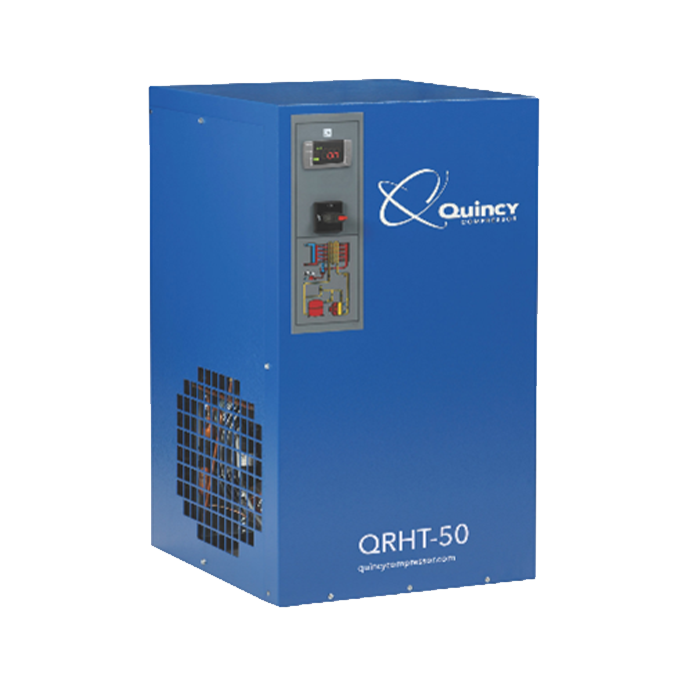
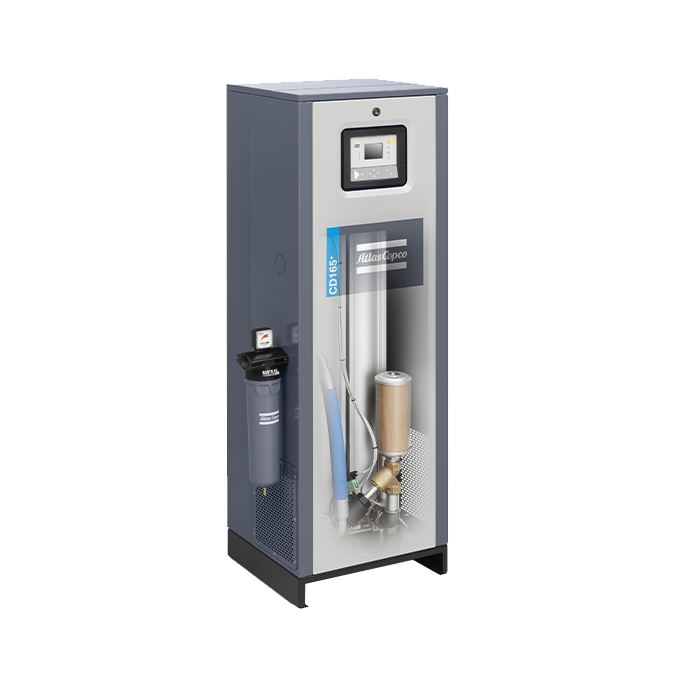
Air Dryers and Why They’re Essential for Compressed Air Systems
Air dryers play a critical role in maintaining the efficiency of an air compressor by removing moisture from the air before it reaches the point of use. Excess water vapor can lead to corrosion, compromised product quality, and untimely equipment breakdowns. Ensuring that only dry, clean air enters your compressed air-powered operations is key to operational success.
Importance of Moisture Control in Air Compressors
By utilizing the right air dryer solution, you can extend the life of your equipment by reducing rust and premature wear in valves and tools, and prevent contamination in sensitive processes. Removing moisture from the air can also increase operational efficiencies by avoiding moisture-related damage to products and machinery, eliminating excess downtime from equipment breakage.
In addition, some industries must ensure compliance in meeting specific standards for air purity and dryness. Dryers are a key part in meeting those specific regulations.
Moist air is harder to compress, therefore utilizing more energy to run the system. This can result in reduced efficiencies and increased energy costs over time. Understanding how to select a compressed air dryer that effectively manages moisture is critical for long-term efficiency.
How Do Desiccant Air Dryers Work?
Desiccant air dryers use a water-attracting material called hygroscopic, which absorbs moisture from compressed air, typically in the form of activated alumina, silica gel, or molecular sieve. The basic process can be broken down into two cycles:
- Adsorption: This is where compressed air passes through a vessel containing desiccant beads. Moisture then clings to the desiccant surface, leaving the air stream dry.
- Regeneration: This happens once the desiccant material becomes saturated; it must be regenerated (or dried) to maintain efficiency. The dryer often uses a second vessel for continuous operation.
By cycling between adsorbing and regenerating phases, a desiccant air dryer for air compressors ensures a constant supply of ultra-dry air.
Key Features of Desiccant Air Dryers
Desiccant air dryers come with unique features that make them indispensable in certain applications:
Regenerative Cycles
Desiccant air dryers feature a dual-tower design - one tower dries the air, while the other regenerates the saturated desiccant. Automated controls manage the switching process through programmable logic controllers (PLCs) or electronic modules.
Suitability for Cold Climates
Desiccant dryers can achieve dew points as low as -100°F, preventing freezing in subzero conditions, making these dryers a crucial component for cold climates.
Compact Design
Many desiccant dryers are designed to take up only a small footprint, making them suitable for tight industrial settings or small spaces.
Regeneration Processes in Desiccant Air Dryers
Regeneration can be done in several ways: heatless regeneration, heated regeneration, and blower purge regeneration.
Heatless regeneration uses a portion of the dried air, called purge air, to remove moisture from the saturated desiccant. This regeneration type is simpler in design but can be less energy efficient due to the loss of purge air.
Heated regeneration applies external heat to remove moisture more efficiently, often reducing the amount of purge air needed. This type can be more expensive upfront but can save energy costs in high-capacity systems.
Blower purge regeneration uses a blower to move ambient air over a heater, which then regenerates the desiccant without using compressed air. This type is ideal for high-flow applications needing minimal purge air loss.
Applications for Desiccant Air Dryers
Desiccant dryers are often used in industries where exceptionally dry air is critical, such as:
Pharmaceutical and Medical Industries
Dry air is crucial within the medical space. Sterile environments must minimize contamination risks as moisture can promote bacterial or fungal growth. These environments require ultra-low dew points to prevent this type of growth.
Pharmaceuticals and medical devices also must meet stringent regulatory standards and are extremely sensitive to moisture and contamination. Air quality is critical for tablet coating and mixing processes.
Food and Beverage Processing
Moisture in compressed air can carry microbes, risking food spoilage and sanitation issues. In processes like bottling, packaging, or pneumatic conveying of dry materials, the smallest amounts of moisture can degrade product quality.
Chemical and Petrochemical
Chemicals and petrochemicals often react with water, leading to product contamination or unwanted chemical reactions. Facilities dealing with high temperatures, pressures, or hazardous materials need reliable, clean and dry compressed air to maintain process stability.
Automotive and Paint Finishing
Automotive paint booths require extremely dry air to achieve smooth and defect-free coatings. Moisture can also reduce tool efficiency and lead to corrosion, increasing maintenance and downtime.
How Do Refrigerated Air Dryers Work?
Unlike desiccant dryers that rely on adsorption, refrigerated air dryers cool the incoming compressed air to lower its temperature. As the air cools, water vapor condenses into liquid droplets that are then separated from the air stream. The steps typically include:
- Pre-Cooling: Air enters a heat exchanger, where it’s cooled down by the outgoing chilled air.
- Refrigeration: A refrigeration circuit (similar to an air conditioner) further cools the air, forcing water to condense.
- Moisture Separation: The condensed water is collected and drained away.
After these steps, the dried air is re-heated to near-room temperature before entering the distribution system, reducing the risk of condensation forming.
Key Features of Refrigerated Air Dryers
Refrigerated air dryers are known for their cycling vs. non-cycling designs. Non-cycling dryers run continuously, providing a constant dew point. These are often simpler to install and maintain. Cycling Dryers adjust compressor operations based on airflow demand, offering energy savings at partial loads.
These dryers are also top notch when it comes to consistent cooling. They can provide steady dew points around 35°F to 50°F, suitable for most general industrial applications.
Refrigerated air dryers are simple to operate, typically involving a straightforward ON/OFF system for cooling cycles. These dryers are often more budget-friendly and can be the preferred choice when comparing a refrigerant dryer vs. desiccant dryer for standard plant air.
Cooling Technology in Refrigerated Air Dryers
A refrigerated air dryer uses a refrigeration circuit consisting of a compressor, condenser, evaporator, and expansion valve. The refrigerant absorbs heat from the incoming air, causing water vapor to condense out. These systems are generally efficient for industries not requiring extremely low dew points, making them a popular choice for day-to-day manufacturing and processing facilities.
Applications for Refrigerated Air Dryers
While they don’t achieve the ultra-low dew points of desiccant dryers, refrigerated dryers are ideal for a variety of industries, including:
General Manufacturing
Most manufacturing processes only require air dried to a moderate dew point to prevent corrosion and product defects, making this a cost-effective choice for moisture control. Their simplicity and reliability make them easy to operate and generally require less maintenance.
Metal Fabrication and Machining
Typical applications for metal fabrication include plasma cutters, sandblasting, and metal finishing. Since metal surfaces quickly rust when exposed to moisture, refrigerated dryers help ensure a dry air supply to protect cutting, grinding, and welding equipment.
Pulp and Paper
Air dryers support applications for pulp and paper such as air-driven rollers, cutting equipment, pneumatic valves and actuation systems, and general plant air for large-scale paper manufacturing. Pulp and paper processes can tolerate a fair amount of humidity, but still require moisture control to keep systems functioning efficiently.
Desiccant Air Dryer vs. Refrigerated Air Dryer: A Detailed Comparison
Selecting the right air dryer depends on your application, operating environment, and budget. When evaluating a desiccant dryer vs. a refrigerated air dryer, consider the following factors:
| Desiccant Air Dryers | Refrigerated Air Dryers | |
| Energy Efficiency | Heatless: can increase energy consumption Heated or Blower Purge: more efficient | N/A |
| Dew Points | Best suited for processes requiring very dry air (dew points below 35°F) | Provides dew points in the 35–50°F range, acceptable for most industrial applications. |
| Maintenance and Replacement Requirements |
|
|
| Cost Considerations |
|
|
Need more guidance to select a refrigerant dryer vs. a desiccant dryer? Visit our resources section for in-depth articles, guides, and tools to help you select the best air dryer for your compressed air system.
Ready to Upgrade Your Compressed Air System?
Choosing between a desiccant air dryer and a refrigerated air dryer for your compressor ultimately depends on the level of dryness your application demands, your operating conditions, and your budget.
No matter which dryer technology best suits you, remember that proper sizing, routine inspections, and timely maintenance are key to ensuring optimal performance and longevity. Our experts at AirCompressors.com are here to help you evaluate your unique requirements and guide you toward the perfect air dryer solution, so you have the confidence you need.
Contact us to speak with an expert today!
