Our Air Expert Insights Team brings decades of compressed air industry experience and unmatched technical expertise to deliver blogs, resources, and advice you can trust. Having served in roles like field technicians, engineers, sales, and customer support specialists, we’ve worked hands-on with the equipment we write about and know the premier brands we represent inside and out.
We’re dedicated to educating you before and after your purchase, helping you make informed decisions and maximize the value of your investment. Buying online should be seamless, but we believe convenience shouldn’t come at the expense of expert service.
Whether you’re researching a product, troubleshooting, or exploring your options, we’re here to guide you every step of the way.
When looking at operations and manufacturing facilities, compressed air plays a vital role in the success of the operations, from powering pneumatic tools to supporting sensitive production processes. However, the act of compressing air naturally introduces moisture, which can cause corrosion, contamination, and disruption. This is where air dryers come in to play by removing water vapor and ensuring a clean, dry supply of compressed air.
When it comes to choosing between types of compressed air dryers, two main technologies dominate the market: desiccant air dryers and refrigerated air dryers. Each has its own operational advantages, ideal applications, and cost considerations. Let’s explore how both dryers function, their key features, and which system might be the best fit for your specific operations and needs.
Air Dryers and Why They’re Essential for Compressed Air Systems
Air dryers play a critical role in maintaining the efficiency of an air compressor by removing moisture from the air before it reaches the point of use. Excess water vapor can lead to corrosion, compromised product quality, and untimely equipment breakdowns. Ensuring that only dry, clean air enters your compressed air-powered operations is key to operational success.
Importance of Moisture Control in Air Compressors
By utilizing the right air dryer solution, you can extend the life of your equipment by reducing rust and premature wear in valves and tools, and prevent contamination in sensitive processes. Removing moisture from the air can also increase operational efficiencies by avoiding moisture-related damage to products and machinery, eliminating excess downtime from equipment breakage.
In addition, some industries must ensure compliance in meeting specific standards for air purity and dryness. Dryers are a key part in meeting those specific regulations.
Moist air is harder to compress, therefore utilizing more energy to run the system. This can result in reduced efficiencies and increased energy costs over time. Understanding how to select a compressed air dryer that effectively manages moisture is critical for long-term efficiency.
How Do Desiccant Air Dryers Work?
Desiccant air dryers use a water-attracting material called hygroscopic, which absorbs moisture from compressed air, typically in the form of activated alumina, silica gel, or molecular sieve. The basic process can be broken down into two cycles:
Adsorption: This is where compressed air passes through a vessel containing desiccant beads. Moisture then clings to the desiccant surface, leaving the air stream dry.
Regeneration: This happens once the desiccant material becomes saturated; it must be regenerated (or dried) to maintain efficiency. The dryer often uses a second vessel for continuous operation.
By cycling between adsorbing and regenerating phases, a desiccant air dryer for air compressors ensures a constant supply of ultra-dry air.
Key Features of Desiccant Air Dryers
Desiccant air dryers come with unique features that make them indispensable in certain applications:
Regenerative Cycles
Desiccant air dryers feature a dual-tower design - one tower dries the air, while the other regenerates the saturated desiccant. Automated controls manage the switching process through programmable logic controllers (PLCs) or electronic modules.
Suitability for Cold Climates
Desiccant dryers can achieve dew points as low as -100°F, preventing freezing in subzero conditions, making these dryers a crucial component for cold climates.
Compact Design
Many desiccant dryers are designed to take up only a small footprint, making them suitable for tight industrial settings or small spaces.
Regeneration Processes in Desiccant Air Dryers
Regeneration can be done in several ways: heatless regeneration, heated regeneration, and blower purge regeneration.
Heatless regeneration uses a portion of the dried air, called purge air, to remove moisture from the saturated desiccant. This regeneration type is simpler in design but can be less energy efficient due to the loss of purge air.
Heated regeneration applies external heat to remove moisture more efficiently, often reducing the amount of purge air needed. This type can be more expensive upfront but can save energy costs in high-capacity systems.
Blower purge regeneration uses a blower to move ambient air over a heater, which then regenerates the desiccant without using compressed air. This type is ideal for high-flow applications needing minimal purge air loss.
Applications for Desiccant Air Dryers
Desiccant dryers are often used in industries where exceptionally dry air is critical, such as:
Pharmaceutical and Medical Industries
Dry air is crucial within the medical space. Sterile environments must minimize contamination risks as moisture can promote bacterial or fungal growth. These environments require ultra-low dew points to prevent this type of growth.
Pharmaceuticals and medical devices also must meet stringent regulatory standards and are extremely sensitive to moisture and contamination. Air quality is critical for tablet coating and mixing processes.
Food and Beverage Processing
Moisture in compressed air can carry microbes, risking food spoilage and sanitation issues. In processes like bottling, packaging, or pneumatic conveying of dry materials, the smallest amounts of moisture can degrade product quality.
Chemical and Petrochemical
Chemicals and petrochemicals often react with water, leading to product contamination or unwanted chemical reactions. Facilities dealing with high temperatures, pressures, or hazardous materials need reliable, clean and dry compressed air to maintain process stability.
Automotive and Paint Finishing
Automotive paint booths require extremely dry air to achieve smooth and defect-free coatings. Moisture can also reduce tool efficiency and lead to corrosion, increasing maintenance and downtime.
How Do Refrigerated Air Dryers Work?
Unlike desiccant dryers that rely on adsorption, refrigerated air dryers cool the incoming compressed air to lower its temperature. As the air cools, water vapor condenses into liquid droplets that are then separated from the air stream. The steps typically include:
Pre-Cooling: Air enters a heat exchanger, where it’s cooled down by the outgoing chilled air.
Refrigeration: A refrigeration circuit (similar to an air conditioner) further cools the air, forcing water to condense.
Moisture Separation: The condensed water is collected and drained away.
After these steps, the dried air is re-heated to near-room temperature before entering the distribution system, reducing the risk of condensation forming.
Key Features of Refrigerated Air Dryers
Refrigerated air dryers are known for their cycling vs. non-cycling designs. Non-cycling dryers run continuously, providing a constant dew point. These are often simpler to install and maintain. Cycling Dryers adjust compressor operations based on airflow demand, offering energy savings at partial loads.
These dryers are also top notch when it comes to consistent cooling. They can provide steady dew points around 35°F to 50°F, suitable for most general industrial applications.
Refrigerated air dryers are simple to operate, typically involving a straightforward ON/OFF system for cooling cycles. These dryers are often more budget-friendly and can be the preferred choice when comparing a refrigerant dryer vs. desiccant dryer for standard plant air.
Cooling Technology in Refrigerated Air Dryers
A refrigerated air dryer uses a refrigeration circuit consisting of a compressor, condenser, evaporator, and expansion valve. The refrigerant absorbs heat from the incoming air, causing water vapor to condense out. These systems are generally efficient for industries not requiring extremely low dew points, making them a popular choice for day-to-day manufacturing and processing facilities.
Applications for Refrigerated Air Dryers
While they don’t achieve the ultra-low dew points of desiccant dryers, refrigerated dryers are ideal for a variety of industries, including:
General Manufacturing
Most manufacturing processes only require air dried to a moderate dew point to prevent corrosion and product defects, making this a cost-effective choice for moisture control. Their simplicity and reliability make them easy to operate and generally require less maintenance.
Metal Fabrication and Machining
Typical applications for metal fabrication include plasma cutters, sandblasting, and metal finishing. Since metal surfaces quickly rust when exposed to moisture, refrigerated dryers help ensure a dry air supply to protect cutting, grinding, and welding equipment.
Pulp and Paper
Air dryers support applications for pulp and paper such as air-driven rollers, cutting equipment, pneumatic valves and actuation systems, and general plant air for large-scale paper manufacturing. Pulp and paper processes can tolerate a fair amount of humidity, but still require moisture control to keep systems functioning efficiently.
Desiccant Air Dryer vs. Refrigerated Air Dryer: A Detailed Comparison
Selecting the right air dryer depends on your application, operating environment, and budget. When evaluating a desiccant dryer vs. a refrigerated air dryer, consider the following factors:
Desiccant Air Dryers
Refrigerated Air Dryers
Energy Efficiency
Heatless: can increase energy consumption Heated or Blower Purge: more efficient
N/A
Dew Points
Best suited for processes requiring very dry air (dew points below 35°F)
Provides dew points in the 35–50°F range, acceptable for most industrial applications.
Maintenance and Replacement Requirements
Require air dryer desiccant replacement at intervals depending on usage and environment.
Periodic checks of purge valves, heater elements (if heated), and control systems.
Maintenance can be more involved due to regeneration cycles.
Focuses on refrigeration components: compressor, condenser, and evaporator.
Maintenance includes cleaning coils, checking refrigerant levels, and ensuring proper drainage.
Simpler day-to-day upkeep.
Cost Considerations
Higher initial cost
Operating expenses vary
Generally lower upfront cost and simpler installation.
Ongoing energy costs can be optimized if a cycling model is used.
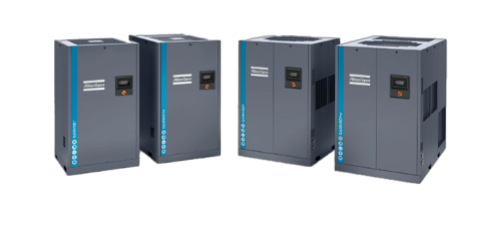
Need more guidance to select a refrigerant dryer vs. a desiccant dryer? Visit our resources section for in-depth articles, guides, and tools to help you select the best air dryer for your compressed air system.
Ready to Upgrade Your Compressed Air System?
Choosing between a desiccant air dryer and a refrigerated air dryer for your compressor ultimately depends on the level of dryness your application demands, your operating conditions, and your budget.
No matter which dryer technology best suits you, remember that proper sizing, routine inspections, and timely maintenance are key to ensuring optimal performance and longevity. Our experts at AirCompressors.com are here to help you evaluate your unique requirements and guide you toward the perfect air dryer solution, so you have the confidence you need.
If you need personalized guidance to determine which compressed air system best suits your needs, our experts at AirCompressors.com are ready to help you find the right product for your business.
Understanding the difference between oil-free and oil-flooded air compressors is essential when selecting equipment that meets your air purity, performance, and maintenance needs.
Oil-flooded and oil-free compressors offer distinct benefits and are suited for different applications. This guide will walk you through the key differences between these compressors and the environments in which they perform best.
What Is an Oil-Flooded Compressor?
An oil-flooded compressor is an air compressor that utilizes oil for lubrication. It is suitable for a wide range of industrial applications. These units are known for their durability under heavy use and long-lasting performance.
How They Work
Oil-flooded compressors pull in the surrounding air and squeeze it into a limited space. The oil, typically kept in a sump, is injected into the compressor at key friction points. This lubrication helps minimize damage and heat buildup in the compression chamber during the process.
Advantages of Oil-Flooded Compressors
Oil-flooded compressors offer various advantages, including:
Heavy-Duty Performance
These units feature a robust build and high-capacity motors, allowing them to excel in high-pressure industrial applications, such as manufacturing and automotive operations.
Longevity
Oil-flooded compressors, with their extended lifespan when properly maintained, are not just reliable but also efficient. The oil's friction-reducing properties ensure less wear and tear, making it an innovative and cost-effective choice.
Cooler Operation
Oil is utilized to keep oil-flooded compressors cool and properly lubricated, allowing them to run efficiently for extended periods with a reduced risk of overheating.
Disadvantages of Oil-Flooded Compressors
While oil-flooded compressors offer unique advantages, potential purchasers should be aware of the following:
Maintenance
The units require regular oil changes, filter replacements, and routine maintenance to operate at top performance.
Risk
Oil-flooded air compressors carry a higher risk of contamination, as oil can enter the compressed air if the oil separator fails or the equipment is not properly maintained.
Limited Mobility
Oil-flooded air compressors are generally much heavier and larger than other air compressor options, which limits their portability. This could pose a challenge in applications where ease of mobility is a factor.
What Is an Oil-Free Compressor?
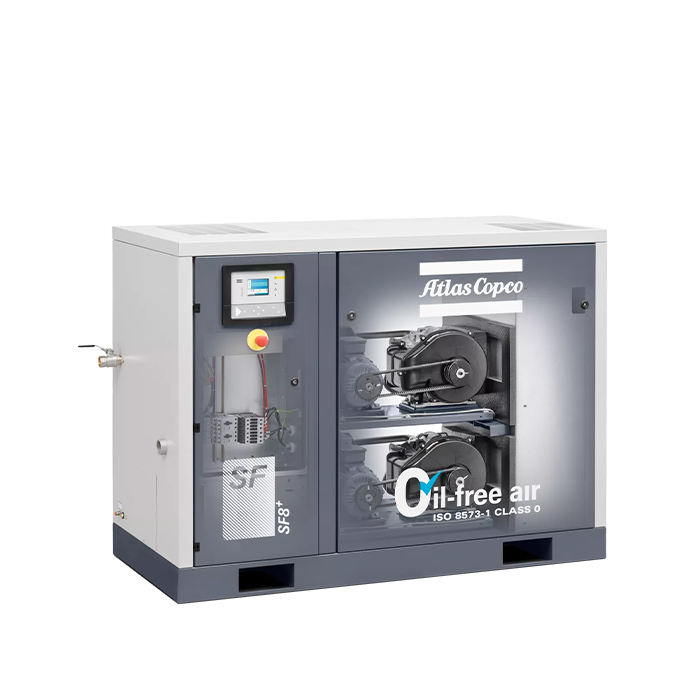
Oil-free air compressors use compressor designs such as scrolls, or materials such as Teflon, water, or air for lubrication. They are lighter and more compact, making them suitable for many applications, including the food and beverage industry, where air purity is essential.
How They Work
Oil-free compressors operate by drawing in ambient air and then compressing it in a two-stage process. First, the air undergoes pre-compression, where it is partially compressed and cooled. In the second stage, final compression occurs, leading to further cooling and air release at the desired pressure.
Advantages of Oil-Free Compressors
Oil-free air compressors offer distinct advantages, such as:
Air Purity
Oil-free compressors use self-lubricating materials, such as Teflon-coated cylinders or water, which minimize friction while eliminating the risk of oil contamination in the compressed air, making them ideal for applications such as food processing and pharmaceuticals.
Low Maintenance
With no oil to change, oil-free compressors require less routine maintenance.
Portability
These units are typically more compact and lightweight, providing greater portability compared to larger, heavier oil-flooded compressors.
Adaptability
Because of their versatile, contamination-free design, oil-free compressors can be used effectively in many different industries and applications.
Disadvantage of Oil-Free Compressors
While oil-free compressors offer several advantages, other factors should also be considered.
Shorter Lifespan
Oil-free compressors typically have a shorter lifespan due to increased wear and tear from the lack of oil lubrication.
Noise Levels
These units may operate louder because they lack oil to dampen internal noise.
Capacity Limitations
Oil-free compressors generally have a lower capacity for repetitive or continuous tasks because the absence of oil lubrication leads to increased heat and wear during extended operation.
Key Considerations When Choosing Between Oil-Lubricated and Oil-Free Compressors
Let’s examine some key factors to consider when comparing oil vs oil free air compressors.
Air Quality Requirements
An oil-free compressor is the best choice for industries that require air purity, such as the food or pharmaceutical sectors. In contrast, an oil-flooded compressor is ideal for heavy manufacturing where high pressure and continuous use require the resilience and power that oil-flooded compressors provide.
Maintenance Requirements
Oil-flooded compressors require regular oil and filter changes for optimal performance, while oil-free compressors require lower maintenance. Consider your business’s capacity to manage maintenance when choosing a suitable compressor.
Performance and Longevity
Oil-flooded compressors stand out because of their durability and performance under continuous, heavy-duty strain. On the other hand, oil-free compressors are ideal for lower-duty tasks requiring the highest level of air purity.
Typical Applications for Oil-Lubricated and Oil-Free Compressors
Oil-free air compressors are best suited for industries such as food and beverage or pharmaceuticals, where air contamination must be avoided. The lighter, more compact design of oil-free compressors also makes them ideal for applications that require mobility, such as construction sites.
Conversely, oil-flooded air compressors are needed in heavy-duty manufacturing or automotive applications where high pressure and constant use are standard, but portability is not a priority.
AirCompressors.com Can Help You Choose the Right Equipment for Your Needs
The experts at AirCompressors.com have extensive experience in helping customers select the right equipment to meet their specific needs. Our compressed air professionals are available to discuss your industry and application, so you can confidently determine whether an oil-flooded or oil-free compressor is best for your business.
When determining which air compressor is right for your operations, you’ll need to review your daily runtime, noise preferences, and tool demands to find which compressor fits your workload best. Rotary screw compressors offer quiet, consistent airflow for long work periods and are best for continuous, high-volume air needs. Piston compressors, also known as reciprocating air compressors, deliver strong, high-pressure output and are best for intermittent, high-pressure uses. Most buyers compare the two when they experience pressure dips, rising energy costs, or equipment noise and other factors that affect their output.
Piston Air Compressor vs. Rotary Screw: Quick Comparison
Before purchasing new equipment, it’s important to understand the differences between a piston air compressor and a rotary screw compressor in these key areas:
Performance and Duty Cycle
Rotary screw compressor: Designed for longer runtimes with steady airflow
Piston compressor: Produces strong pressure for shorter cycles
Noise Levels
Rotary screw compressor: Often 65 to 75 dB
Piston compressor: Commonly 80 to 90 dB or higher
Air Temperature and Moisture
Rotary screw compressor: Cooler air discharge helps reduce moisture
Piston compressor: Warmer air increases moisture risk
Energy Efficiency
Rotary screw compressor: More efficient during heavy operation
Piston compressor: Uses more energy during long periods of continuous use
Cost Considerations
Rotary screw compressor: Higher initial cost
Piston compressor: Lower upfront price
Best Fit
Rotary screw compressor: Long shifts and consistent tool use
Piston compressor: Smaller shops and intermittent work
These compressors are the most common industrial air compressor types utilized across various industries, so evaluating your operational needs and output will be critical in your purchase decision.
Costs and Maintenance
When it comes to buying new equipment, you must balance total cost of ownership, not simply purchase price. Costs vary based on workload, environment, and tool demand.
Here is a quick cost comparison for rotary screw and piston compressors:
Upfront Costs
Rotary screw compressor: Higher initial cost
Piston compressor: Lower initial cost
Operation Costs
Rotary screw compressor: Saves energy during long shift
Piston compressor: Uses more energy during extended operation
Service Needs
Rotary screw compressor: Fewer wear parts with longer service intervals
Piston compressor: More frequent oil and part changes
Consider your holistic needs to evaluate which option fits your operations best.
When to Choose a Piston Compressor
A piston compressor supports tasks that require short bursts of high pressure without major investment. Its simple design fits smaller shops and general tool use.
A piston air compressor works well for:
Tools requiring up to 175 to 200 PSI
Garages and small facilities
Lower-budget startups and maintenance teams
Straightforward service routines
Lower daily runtime
Applications with many industrial air compressor types
Piston Compressor Product Recommendations
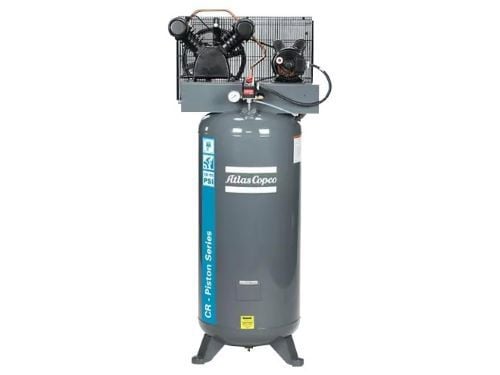
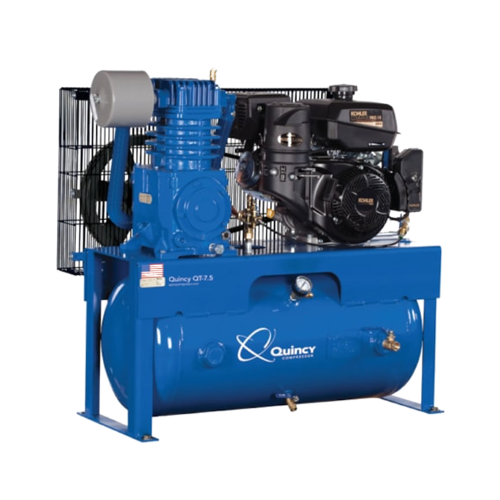
At AirCompressors.com, we provide a variety of piston air compressor options from top brands like Atlas Copco and Quincy Compressor, including:
Need guidance? Our experts are here to help you select the right unit for your business – contact us today!
When to Choose a Rotary Screw Compressor
A rotary screw air compressor provides quiet operation and steady airflow throughout the day. Facilities focused on efficiency and long shifts often rely on this compressor style.
A rotary screw compressor works well for:
Multi-hour operation
Areas needing lower noise
Higher airflow requirements
Production tools needing consistent air
Teams focused on reducing energy use
Operations seeking long-term cost savings
Rotary Screw Compressor Recommendations
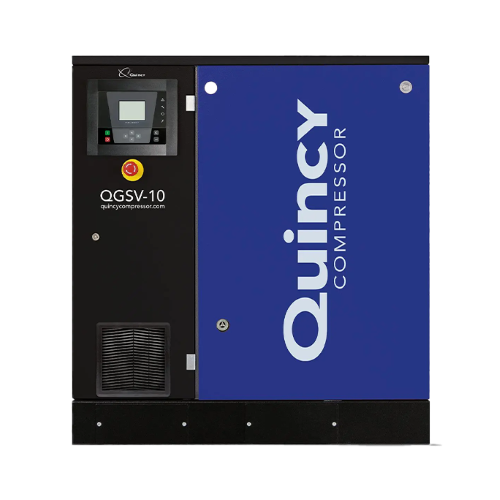
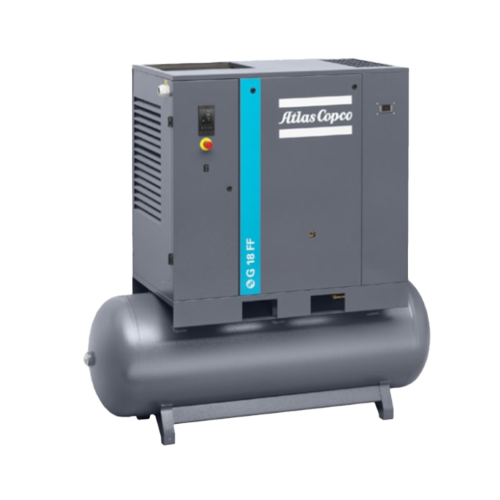
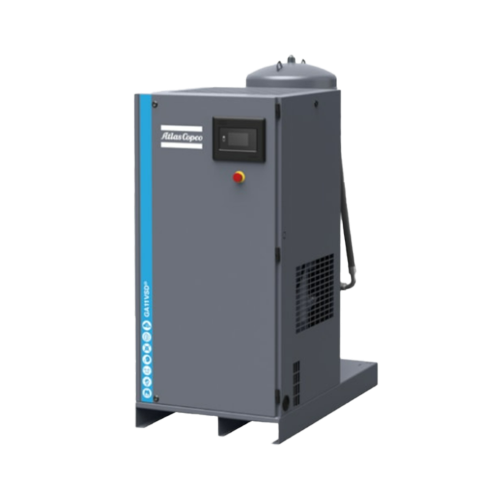
AirCompressors.com specializes in a full range of rotary screw air compressors designed to meet the demand of businesses in various industries. Our selection of rotary screw compressors also features Atlas Copco and Quincy Compressor models, known for their reliability and performance, including:
Properly sizing your compressor helps maintain consistent performance and reduce stress on components. As you compare the different models of air compressors, make sure you follow these sizing guidelines to choose the perfect fit:
Add the CFM of tools that may run at the same time
Include a 25% buffer
Match required PSI
Choose a larger tank when pressure recovery is frequent
Confirm filtration and drying based on air quality requirements
If you are in need of additional components for your compressor, review AirCompressors.com accessory options to help your air compressor run more efficiently.
Get Help Choosing the Right Compressor – Shop Today!
Our experts at AirCompressors.com can help you review your tools, air requirements, and daily runtime to match you with the right compressor, whether rotary screw, piston, or other models, that delivers the power, efficiency, and reliability your operation needs.