

Best Portable Air Compressors for Garage & DIY Use
Portable air compressors are a practical choice for home garages, DIY projects, automotive work, tire inflation, nail guns, woodworking, light-duty painting, service trucks, and small shop applications. The right portable compressor depends on the tools you plan to run, the required CFM at PSI, tank size, noise level, duty cycle, and whether you need an oil-free or oil-lubricated design.
AirCompressors.com sells both industrial air compressors and smaller portable garage air compressors, including models designed for home workshops, automotive bays, contractors, and mobile compressed air use.
What Is a Portable Air Compressor?
A portable air compressor is a compact or movable compressor designed to provide compressed air where you need it. Portable compressors are commonly used in home garages, job sites, service vehicles, automotive shops, woodworking areas, and small commercial spaces where mobility matters.
Portable air compressors can power tire inflators, brad nailers, framing nailers, staplers, blow guns, air ratchets, smaller impact tools, and other pneumatic tools. Some larger portable units can support heavier automotive or contractor applications, but high-demand tools may require more CFM, a larger tank, or a stationary compressor.
Garage & DIY Use
Great for tire inflation, cleaning, hobby work, trim nailers, small repairs, and light automotive tasks.
Contractor Use
Useful for nail guns, jobsite repairs, mobile work, framing, roofing, and light-duty pneumatic tools.
Automotive Use
Can support tire inflation, air ratchets, blow guns, and some impact tools depending on CFM and duty cycle.
What Size Portable Air Compressor Do You Need for a Garage?
For garage air compressor sizing, CFM is usually more important than horsepower. CFM tells you how much usable airflow the compressor can deliver at a specific PSI. Many air tools are rated by required CFM at 90 PSI, making CFM at 90 PSI one of the most important specs when comparing portable air compressors.
Smaller garage compressors may be fine for tire inflation, nail guns, and occasional use. Tools like impact wrenches, grinders, sanders, die grinders, and paint sprayers usually require more airflow and may need a larger portable compressor or a stationary shop compressor.
Best Portable Air Compressor Types
| Compressor Type | Best For | Advantages | Watchouts |
|---|---|---|---|
| Pancake Compressors | Home garage, trim work, tire inflation, nail guns | Compact, stable, easy to store, often oil-free | Limited tank size and airflow for high-demand tools |
| Hot Dog Compressors | DIY projects, small shops, hobby use | Portable, simple design, good for occasional use | May not keep up with continuous air tools |
| Twin Stack Compressors | Contractors, framing, finish work, mobile use | More air storage than very small units | Can be heavier and louder than compact units |
| Wheelbarrow Compressors | Jobsite, contractor, service truck, heavier portable use | Higher capacity, mobile, jobsite friendly | Larger footprint and may be more than a home garage needs |
| Quiet Portable Compressors | Indoor garage, residential areas, hobby shops | Lower noise level and better user comfort | May cost more or have lower CFM than louder models |
Portable Air Compressor CFM Guide for Common Garage Tools
Air tools vary widely in CFM demand. Always check the tool manufacturer’s requirement, but the chart below can help with early planning.
| Garage Tool | Typical CFM Range | Common PSI | Portable Compressor Notes |
|---|---|---|---|
| Tire Inflator | 1–3 CFM | 90–120 PSI | Most small portable compressors can handle tire inflation. |
| Brad Nailer | 0.5–2 CFM | 70–100 PSI | Good fit for compact garage compressors. |
| Framing Nailer | 2–4 CFM | 90–120 PSI | Works with many contractor-style portable compressors. |
| Impact Wrench | 4–8+ CFM | 90 PSI | Choose higher CFM if used frequently or for larger fasteners. |
| Air Ratchet | 3–6 CFM | 90 PSI | May require a larger portable compressor for steady use. |
| Paint Sprayer | 6–12+ CFM | Varies | Often requires more airflow and careful moisture control. |
| Die Grinder / Sander | 8–15+ CFM | 90 PSI | High-demand tools may exceed small portable compressor capacity. |
Oil-Free vs. Oil-Lubricated Portable Air Compressors
Oil-Free Portable Compressors
Often preferred for homeowners and DIY users because they require less maintenance and are easier to store and move.
Oil-Lubricated Portable Compressors
Can be a good fit for heavier-duty use, longer service life, and applications where maintenance is acceptable.
Quiet Portable Compressors
Popular for garages, indoor work areas, residential settings, and hobby shops where noise matters.
Portable vs. Stationary Air Compressors
Portable compressors are best when mobility, storage, and occasional use matter. Stationary compressors are usually better for higher CFM demand, continuous use, larger tools, multiple users, and full shop compressed air systems.
| Need | Portable Compressor | Stationary Compressor |
|---|---|---|
| Home garage projects | Strong fit | May be more than needed |
| Continuous shop demand | Limited | Better fit |
| Mobility | Best fit | Limited |
| Multiple tools/users | Depends on CFM | Better fit |
| High-demand industrial use | Usually not ideal | Best fit |
Best Portable Air Compressor for Impact Wrenches
Impact wrenches are one of the most common reasons homeowners and automotive enthusiasts upgrade from smaller pancake compressors to larger portable air compressors. While compact compressors may work for occasional lug nut removal, frequent automotive work usually requires higher airflow and better air recovery.
Many 1/2-inch impact wrenches require approximately 4–8 CFM at 90 PSI, while larger automotive tools may require even more airflow for continuous use. If you plan to use impact tools regularly, look for portable compressors with higher CFM ratings, larger tanks, and stronger duty cycles.
Best Portable Air Compressor for Tire Inflation
Portable air compressors are commonly used for vehicle tire inflation, off-road tires, trailers, motorcycles, ATVs, bicycles, sports equipment, and general garage maintenance. Smaller portable compressors are often sufficient for occasional inflation tasks because tire inflators usually require lower CFM than pneumatic air tools.
Many homeowners prefer compact portable compressors because they are easy to store in garages, sheds, trucks, and utility vehicles while still providing enough PSI for common inflation needs.
Best Quiet Air Compressor for Home Garages
Quiet portable air compressors have become increasingly popular for home garages, indoor workshops, hobby spaces, and residential neighborhoods where noise matters. Many quieter compressors operate at lower decibel levels than traditional contractor-style compressors, making them easier to use in enclosed spaces.
Quiet air compressors are commonly used for woodworking, detailing, tire inflation, hobby work, trim nailers, airbrush systems, and indoor garage projects where reduced noise improves comfort.
Portable Air Compressors for Automotive Work
Automotive garage users often need portable air compressors for impact wrenches, tire service, detailing tools, ratchets, blow guns, brake work, suspension repairs, and general shop maintenance. The right portable compressor depends heavily on airflow demand and how often tools are used.
For occasional DIY automotive use, many portable compressors work well. For frequent wrenching, sanding, grinding, or painting, larger portable compressors with higher CFM output are typically recommended.
Many garage users researching shop air piping systems or portable garage compressors choose modular compressed air setups that allow future expansion as tool demand increases.
Portable Air Compressors for Woodworking & DIY Projects
Portable air compressors are widely used in woodworking shops, DIY workshops, hobby garages, trim carpentry, framing, cabinetry, furniture building, and home renovation projects. Nail guns, staplers, brad nailers, and finish tools often work well with smaller portable compressors.
Many woodworking users prefer compact or quiet portable compressors because they are easier to store, move around a workshop, and use indoors compared to larger industrial systems.
Popular Portable Air Compressor Brands
Portable air compressors are available in many configurations ranging from compact DIY compressors to heavier-duty contractor and automotive units. Popular portable compressor brands commonly used in garages, workshops, and job sites include Quincy, Puma, Rolair, California Air Tools, Metabo HPT, Makita, Campbell Hausfeld, and other portable compressor manufacturers.
The best portable air compressor brand depends on airflow requirements, noise preference, mobility, duty cycle, storage space, and intended tool usage.
Portable Air Compressor FAQs
What is the best portable air compressor for a garage?
What size air compressor do I need for a home garage?
Are portable air compressors good for impact wrenches?
Are oil-free portable air compressors good for DIY use?
Can I use a portable air compressor for painting?
What PSI do garage air tools need?
Are quiet portable air compressors worth it?
Where can I buy portable air compressors online?
Featured Portable Air Compressors
These portable air compressors are popular for garage use, DIY projects, automotive work, tire inflation, nail guns, impact wrenches, painting, and light-duty shop applications.
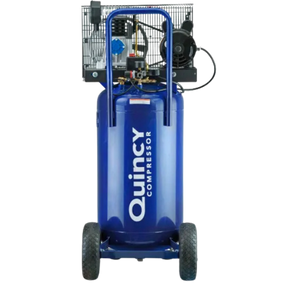
Quincy 2 HP 24 Gallon Vertical Portable
115V single-phase portable compressor for garage, shop, and light-duty compressed air needs.
$999.00 /ea
SKU: 1129740227 View Product
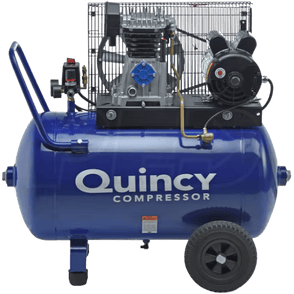
Quincy 2 HP 24 Gallon Horizontal Portable
Horizontal portable compressor with wheels and handle for small shops, home garages, and DIY use.
$949.00 /ea
SKU: 1129740226 View Product
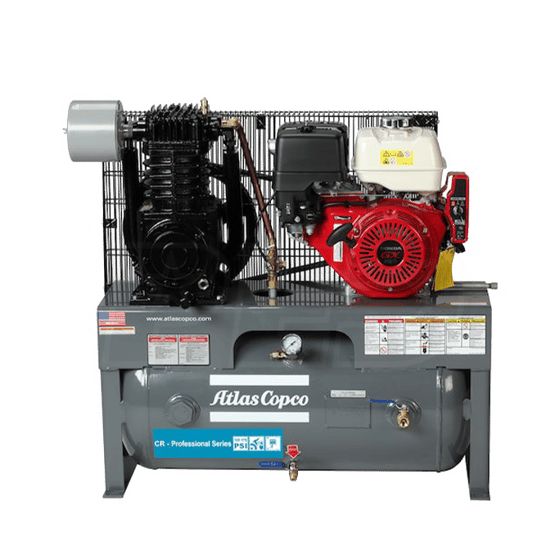
Atlas Copco CR Portable Gas Compressor
Portable gas reciprocating compressor for higher-output contractor and mobile compressed air use.
$4076.00 /ea
SKU: 2020041630 View Product
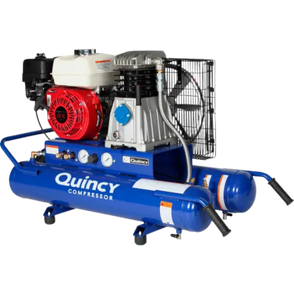
Quincy Wheelbarrow PAT38 Honda GX160
Gas-powered wheelbarrow compressor for mobile work, service trucks, job sites, and contractor use.
$1,276.38 /ea
SKU: 1129102812 View Product
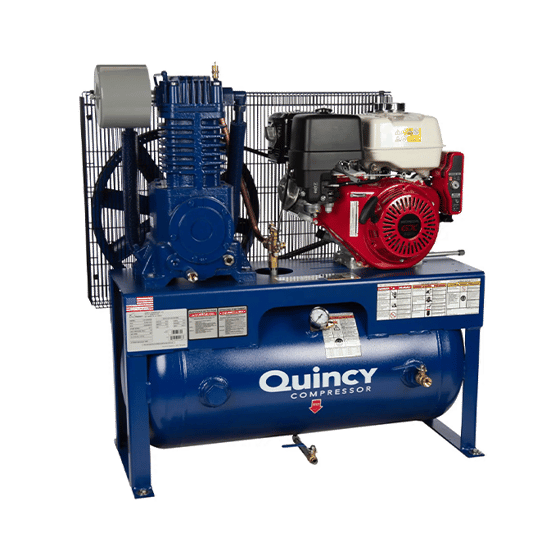
Quincy QT 13 HP Portable Compressor
Heavy-duty gas-powered portable compressor for automotive shops, contractors, and mobile air systems.
$4,299.00 /ea
SKU: 2020040970 View Product
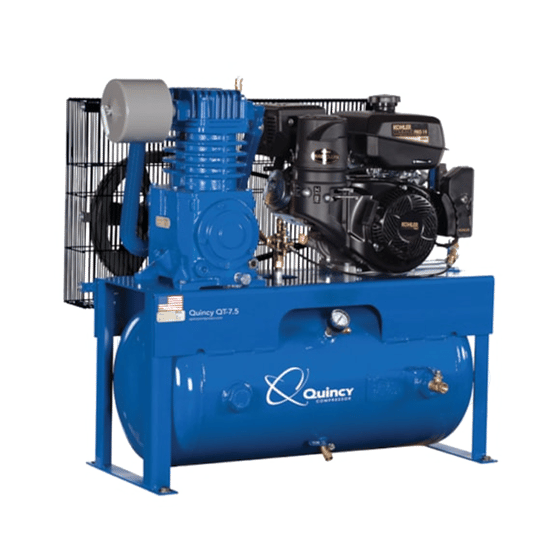
Quincy QT 14 HP Portable Compressor
Portable two-stage compressor with Kohler engine for demanding jobsite and automotive applications.
$3,999.00 /ea
SKU: 2020040971 View Product
Need help choosing? Use our CFM Calculator to find the right size compressor for your tools and applications.
